Black Panther Party Heritage Trail in Illinois
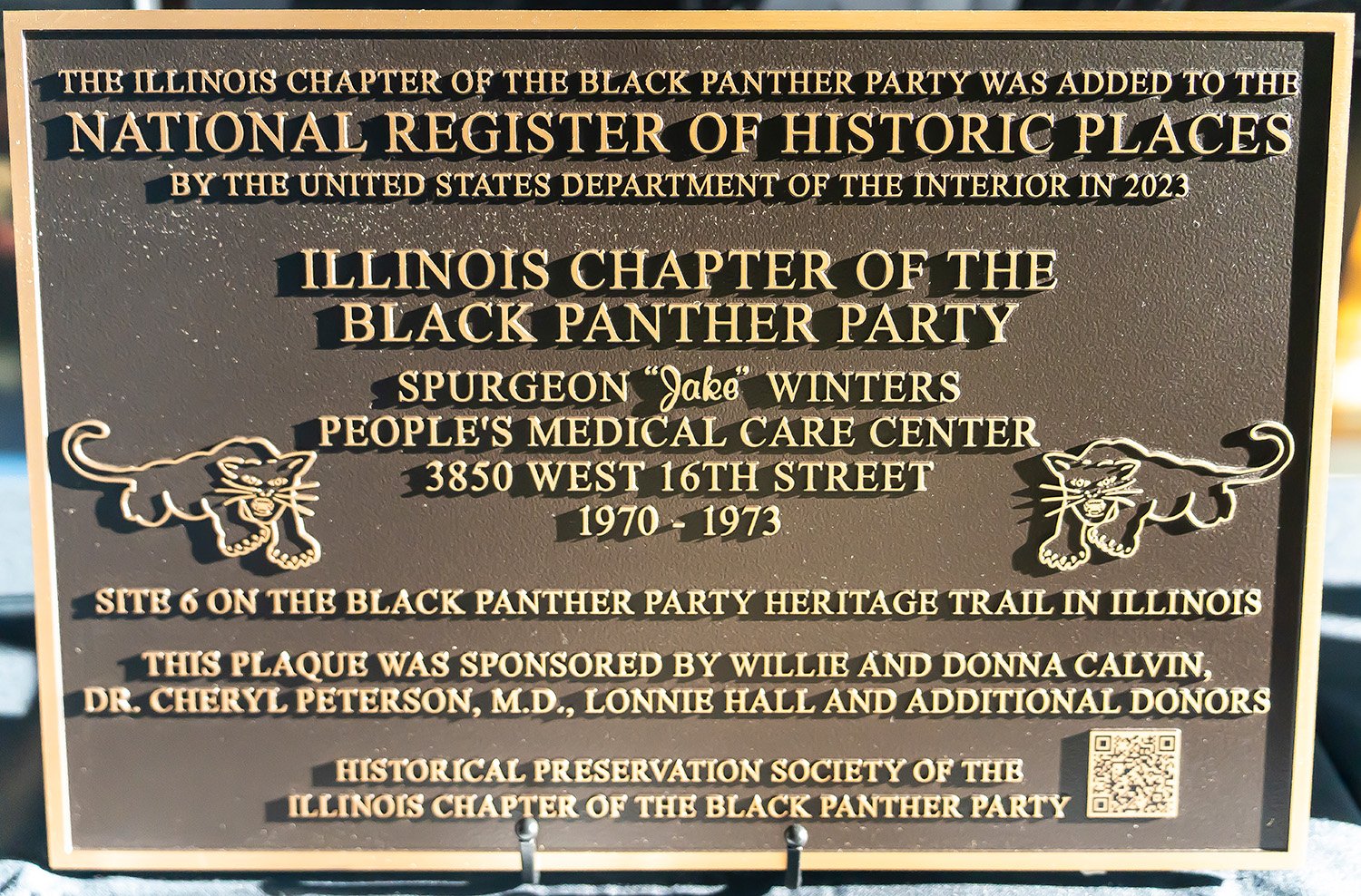
Site 6
Spurgeon “Jake” Winters People’s Medical Care Center
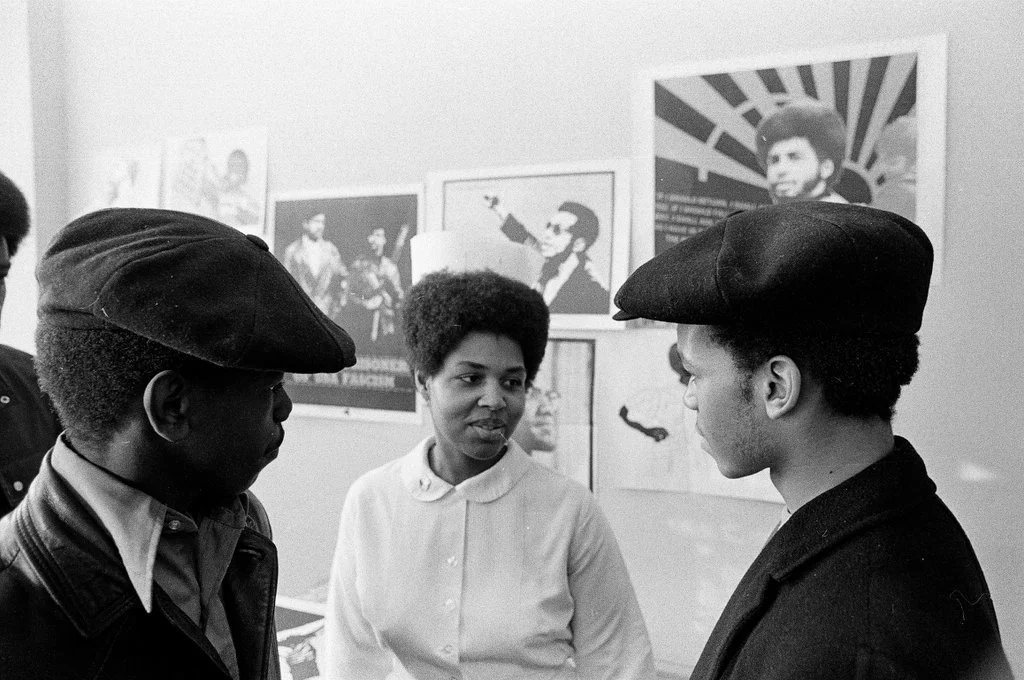
Photo: January 4, 1970, (l-r) Panther Ralph Bostick, Nurse Florence Watson, Deputy Minister of Health Ronald “Doc” Satchel. Photographer Howard D. Simmons, ST-19030953-0009, Chicago Sun-Times collection, Chicago History Museum
Site 6
Name
Spurgeon “Jake” Winters People’s Medical Care Center
Location
3850 W. 16th Street, Chicago, IL 60623, North Lawndale.
Historical Period of Significance
1969-1973.
Original Structure
Demolished
Panther Activities
Free Medical Care
Historical Marker Installation Status
Not yet installed.
Site 6: Spurgeon “Jake” Winters People’s Medical Care Center
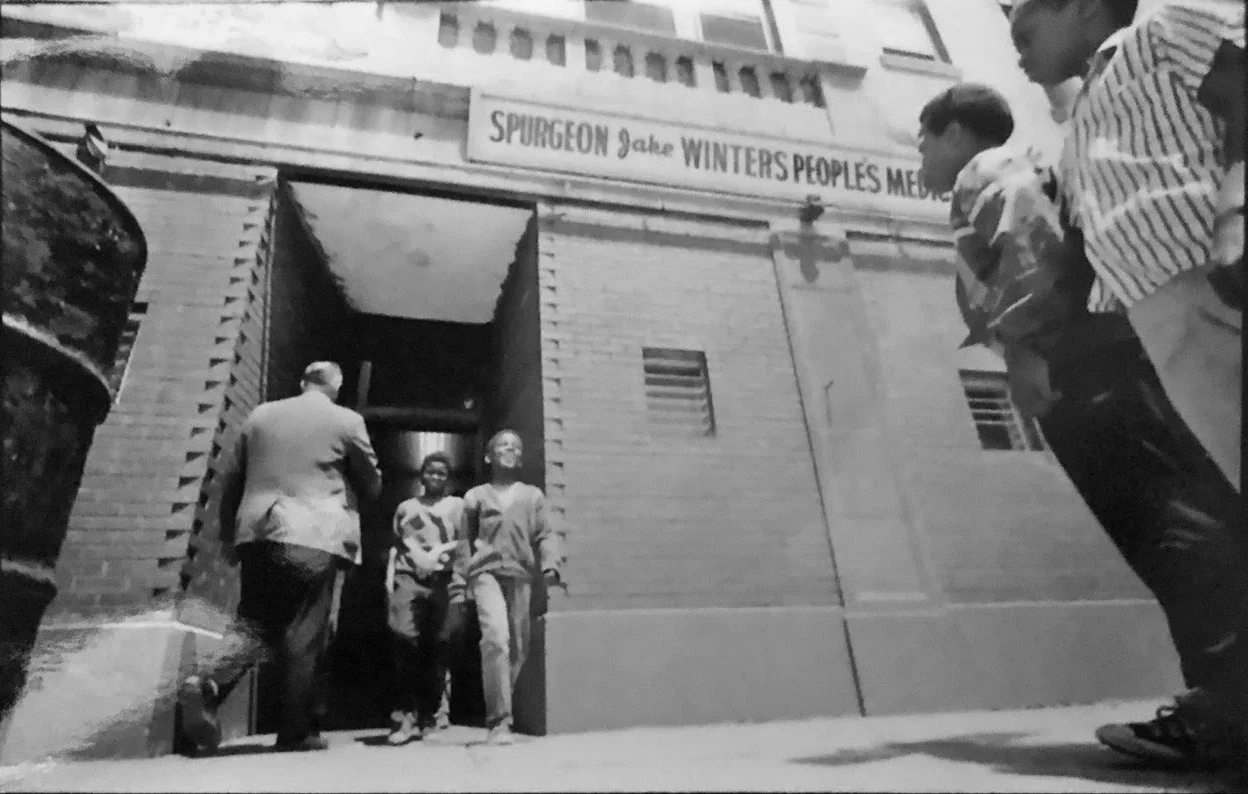
People entering and exiting the medical center. Photographer unknown.
The Illinois Chapter experienced many setbacks before the medical center opened: permits were denied, finances were a struggle, and the Secretary of State denied their incorporation application.
Ronald “Doc” Satchel, Deputy Minister of Health and Fred Hampton met with Dr. Quentin Young, a revolutionary doctor who became Chairman Fred’s personal physician. Young recruited volunteer doctors, medical students, and nurses to serve. Dr. Eric Kast, a Jewish Marxist, worked with the Lawndale Association for Social Health and helped with construction. Kast became the primary physician at the center and saw patients there for two years.
Before it opened, the Panthers leafletted the community and went door-to-door asking the people what medical conditions they had and what they needed. “We wanted them [the people] to accept us first. We didn’t want to just go in,” said Ralph Bostick, who was part of the Health Cadre. Bostick and Ernestine Crossley, Satchel’s wife, were co-coordinators of the clinic and worked there every day.
The Panthers were very deliberate in naming initiatives after fallen comrades. Spurgeon “Jake” Winters did contractor’s work inside the medical center’s converted storefront before he was killed by police on November 13, 1969.
On December 25, 1969, the Panthers dedicated the new clinic to Spurgeon “Jake” Winters as the Spurgeon “Jake” Winters People’s Medical Care Center. It officially opened on January 4, 1970.
Every patient was interviewed by a Patient’s Advocate, and the Party was the first to advocate for privacy in healthcare and dignity in treatment. Details of patients’ care were not said across the entire waiting room as was customary in other health settings. The clinic was opened every day except Saturday from 5:00 p.m. to 10:00 p.m. No patient had to fill out paperwork or pay to be seen. Doctors were paid if the patients had a medical voucher and, in turn, donated the money to the clinic. Party members and community volunteers were trained to conduct urinalysis, screenings, and other tests.
In April 1971, the Black Panther Party began a national public outreach campaign on Sickle Cell Anemia. Bostick recalled, “We would send people out, and we would go out into the community and screen people for Sickle Cell Anemia. We would get people to submit their blood, then we would go back to the lab and analyze it. Then we would notify those, you know, [who had it]. We found a lot of black people had Sickle Cell Trait and we found a few that actually had Sickle Cell Anemia. They would get sick and didn’t know why at the time. That was a major program.”
Chapter member and clinic co-coordinator Ernestine Crossley said, “We went door-to-door and tested people from Cabrini Green [public housing], Ida B. Wells [public housing], and partnered with the Red Cross for blood donations. We asked the people about their diets, checked their vitals...the Spurgeon Jake Medical Clinic was holistic care. Psych evaluations and referrals, dialogue with gangs, legal help, we did everything. And, it was really scary what some were doing for self-care.”
Penn Elementary School, located across the street from the medical center at 1616 S. Avers, was the first location of Sickle Cell Anemia canvassing. It still exists today, and the school’s mascot is a panther.
In 1972, the Black Panther Party restructured the Ten-Point Platform and Program and added healthcare to Point 6:
6. We want completely free health care for all Black and oppressed people.
We believe that the government must provide, free of charge, for the people, health facilities which will not only treat our illnesses, most of which have come about as a result of our oppression, but which will also develop preventive medical programs to guarantee our future survival. We believe that mass health education and research programs must be developed to give all Black and oppressed people access to
advanced scientific and medical information, so we may provide ourselves with proper medical attention and care.
Also in 1972, President Richard Nixon signed the National Sickle Cell Anemia Control Act, which provided funds for education, research, and treatment for those with the disease.
Where other groups could not organize healthcare clinics in poor neighborhoods, the ILBPP community outreach proved successful. The American Journal of Public Health estimated that the Spurgeon “Jake” People’s Medical Care Center had 1400 patients registered and saw at least 75 patients a week. Dr. Young recalled approximately 100 patients a week.
Ralph Bostick, who worked alongside Ronald “Doc” Satchel, women in the Party, volunteers, and medical staff, emotionally offered his summation of the Spurgeon Jake Winters Free Medical Center: “We had a solid response. We were accepted by the community. We were protected by the community, and the people came.”
PHOTOS
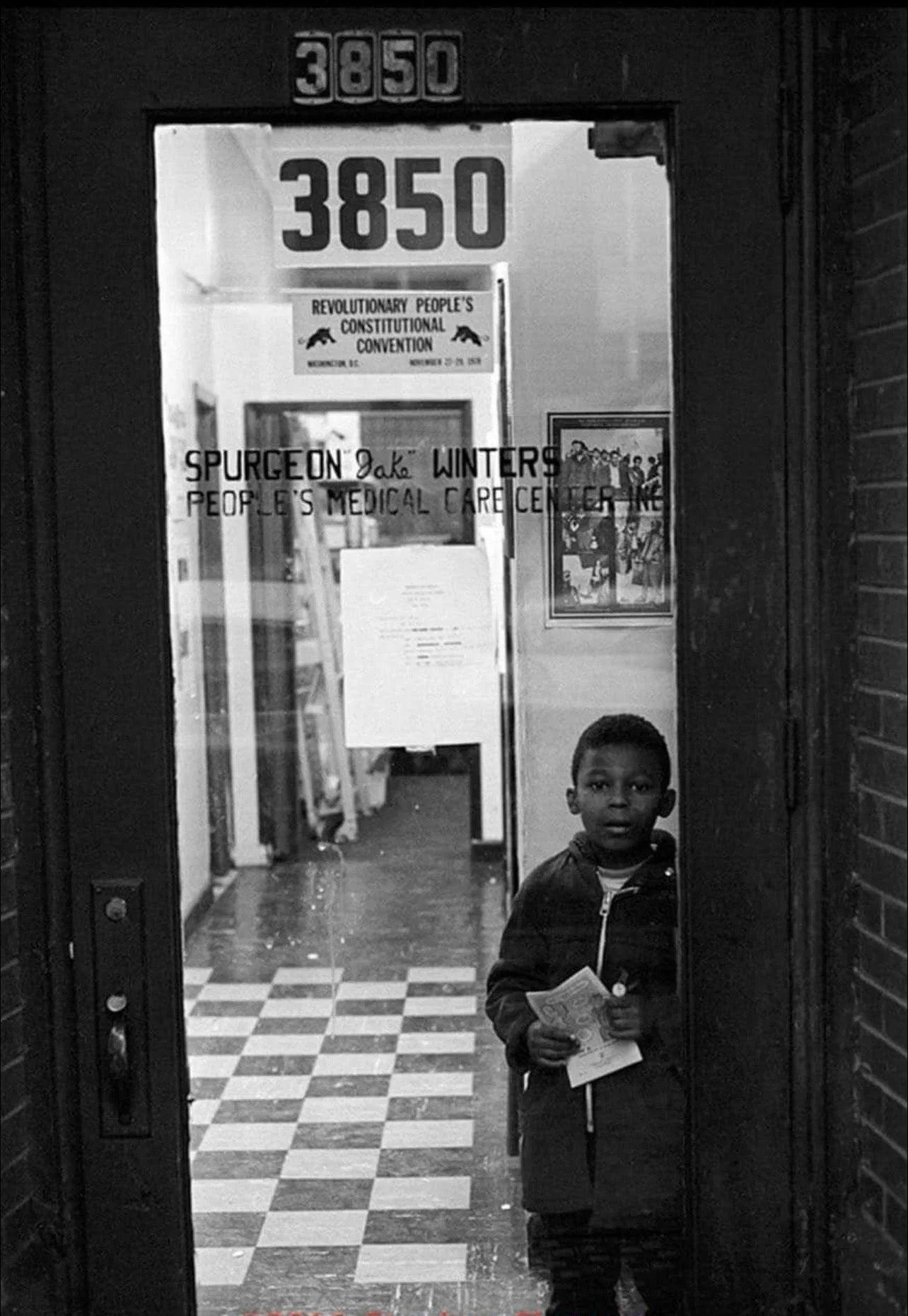
Entrance to the Spurgeon "Jake" Winters People's Medical Care Center. Photographer unknown.
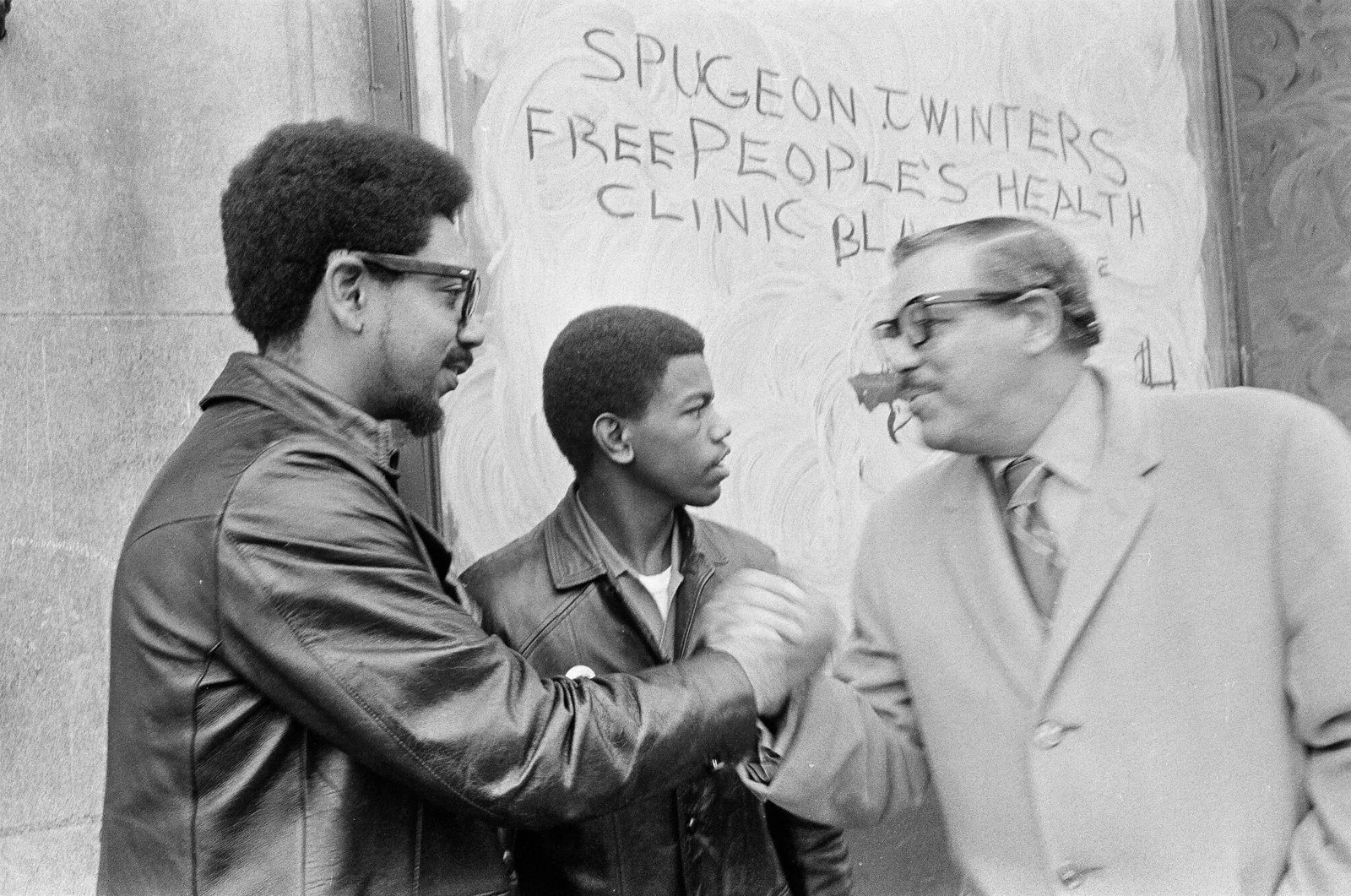
(l-r) Deputy Minister of Defense Bobby Rush, Clinic Coordinator Ralph Bostick, Alderman Sammy Raynor on December 25, 1969, at the Dedication. Photographer Larry Graff, ST-19030952-0004, Chicago Sun-Times collection, Chicago History Museum
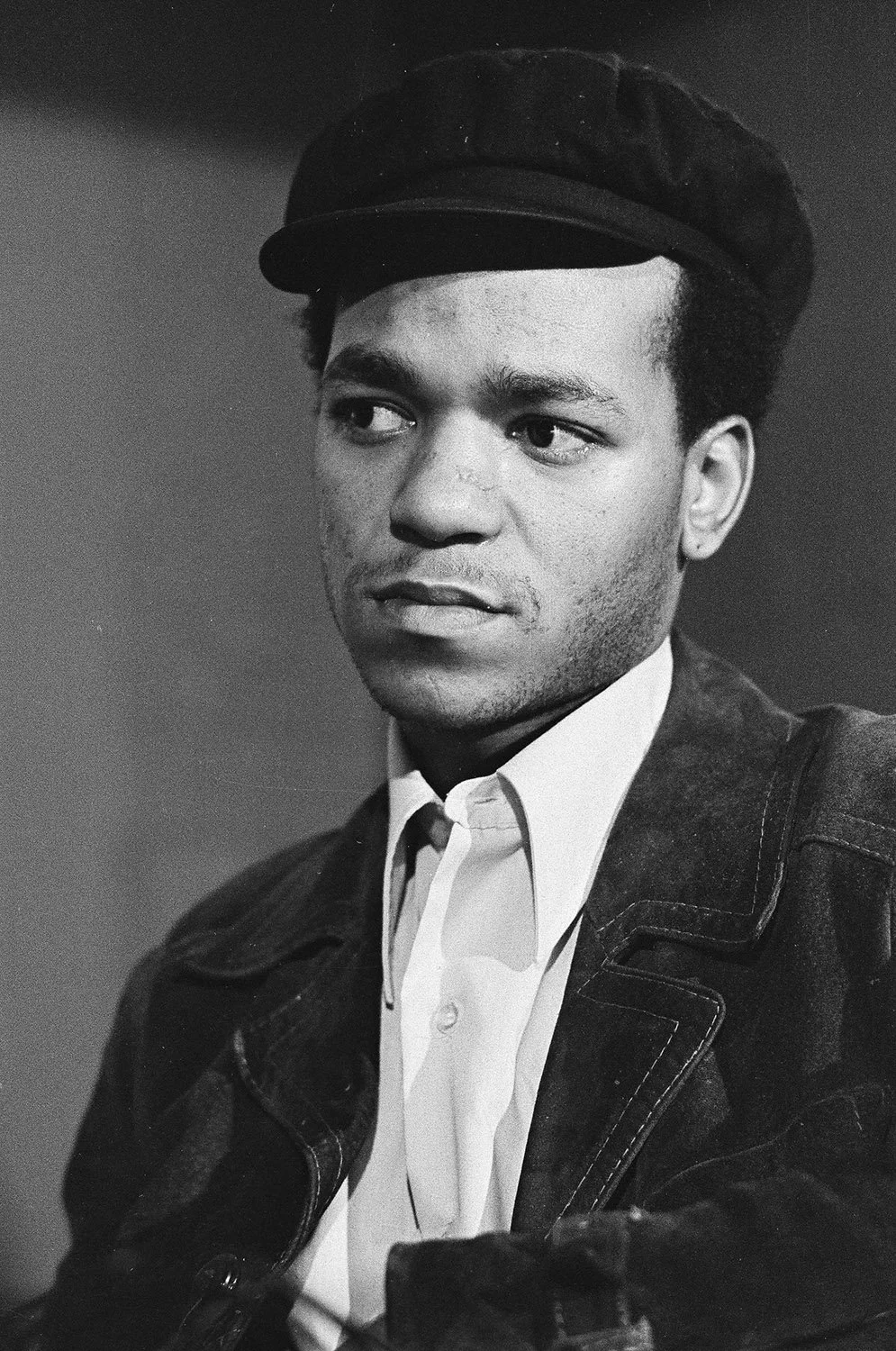
Deputy Minister of Health and Coordinator of the Spurgeon "Jake" People's Medical Care Center was a survivor of the December 4, 1969, assassination of Deputy Chairman Fred Hampton and Defense Captain Mark Clark. Satchel was shot five times during the raid in the hands, stomach, and legs. He was frequently hospitalized and had several inches of his colon removed because of the attack. Photographer Fred Stein, October 26, 1972, ST-19030979-0028, Chicago Sun-Times collection, Chicago History Museum
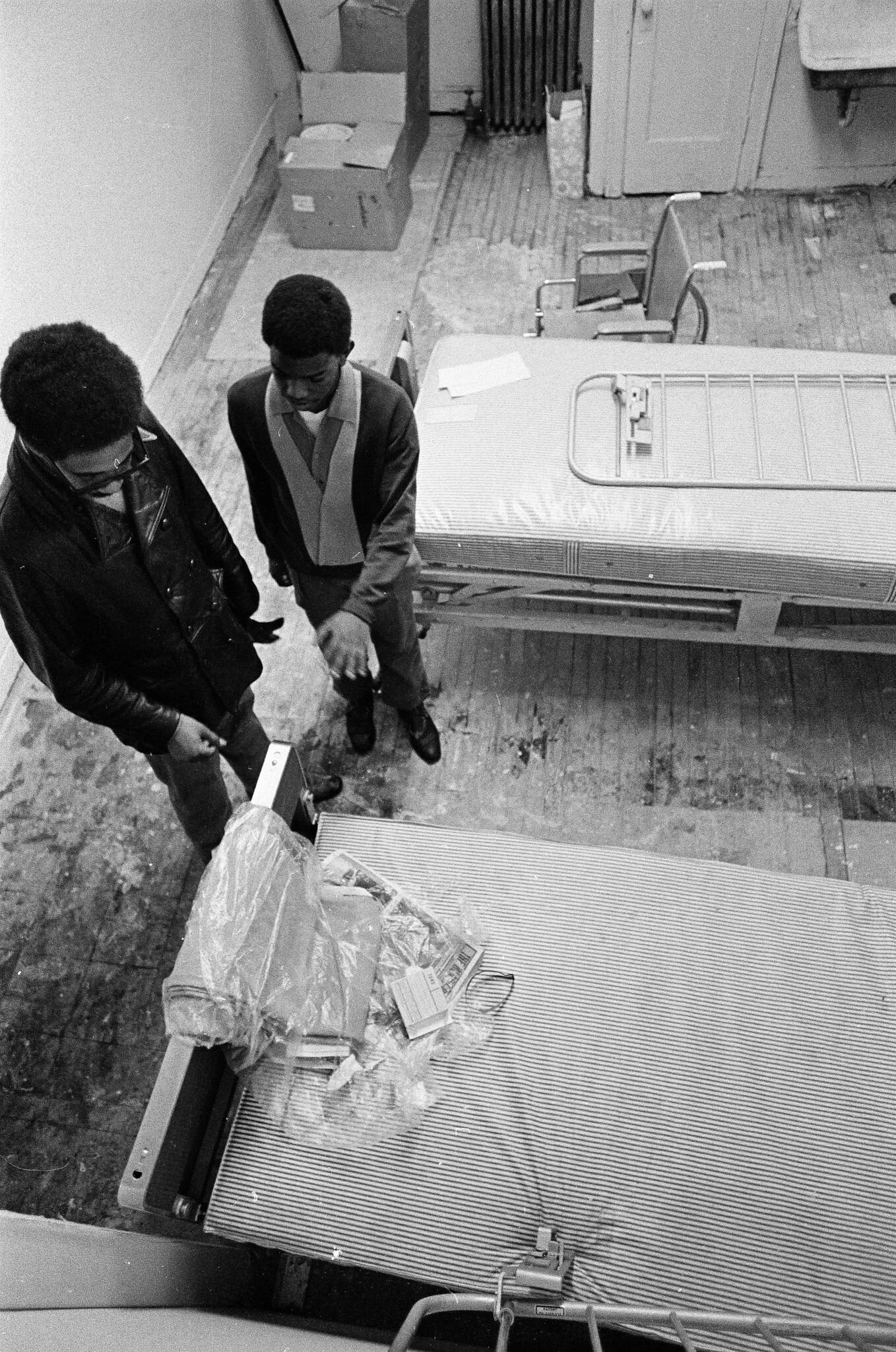
Ralph Bostick shows Bobby Rush donated hospital beds and a wheelchair on December 25, 1969, at the Dedication. Photographer Larry Graff, ST-19030952-0022, Chicago Sun-Times collection, Chicago History Museum
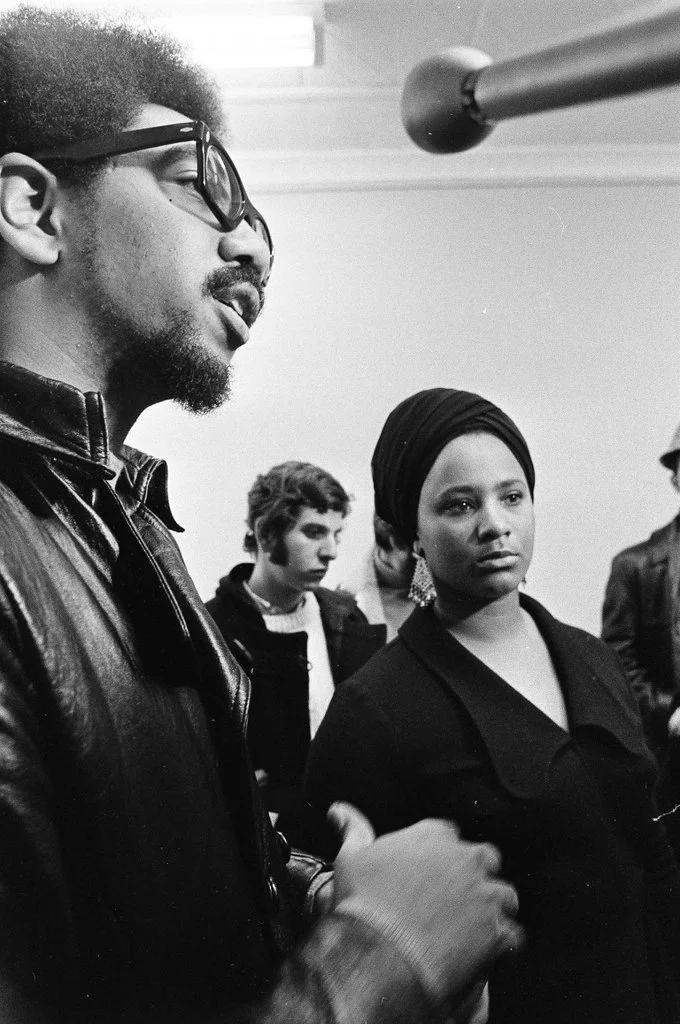
Bobby Rush and Communications Secretary Ann Campbell speak with the media on December 25, 1969, at the Dedication. ST-19030952-0021, Chicago Sun-Times collection, Chicago History Museum
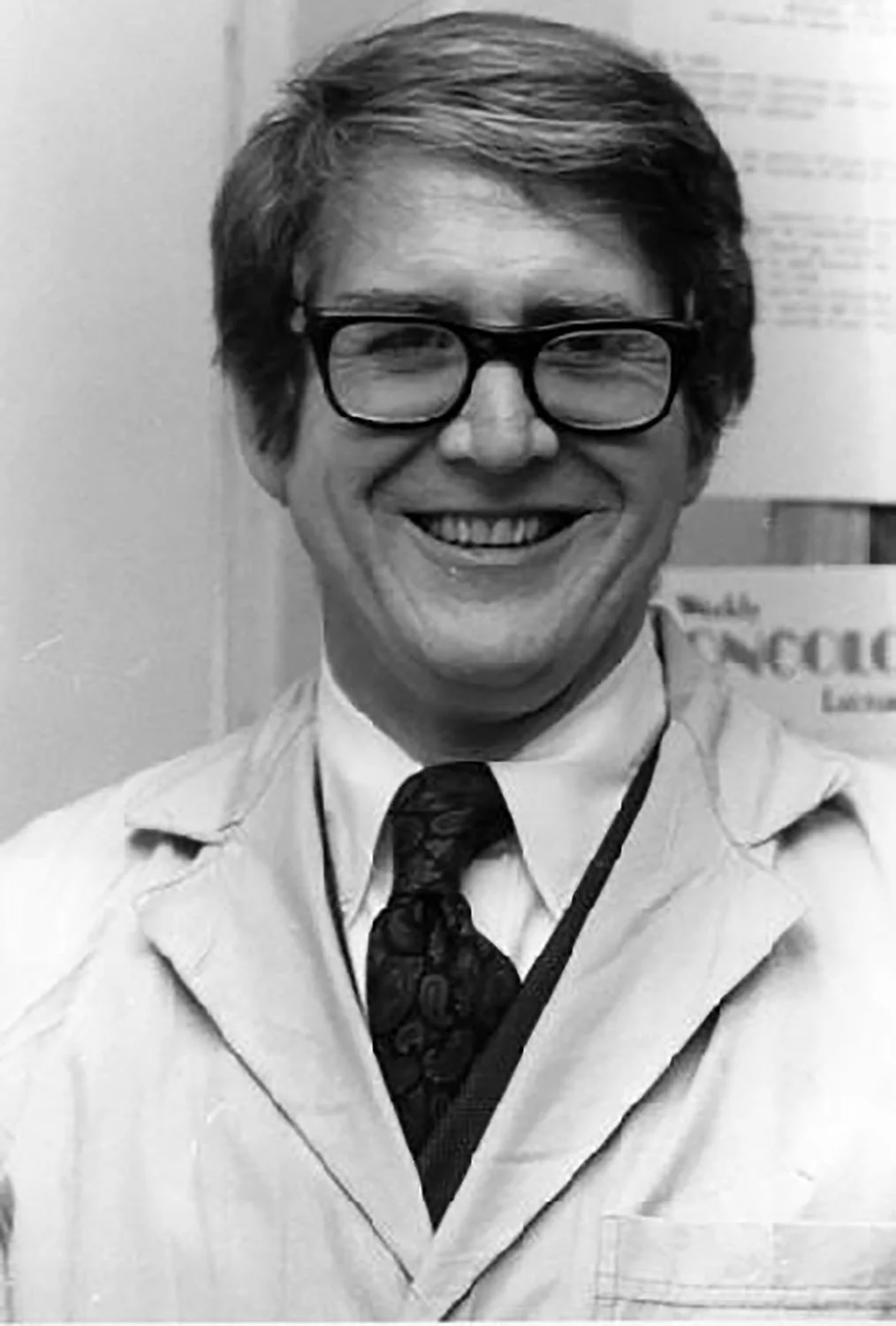
Dr. Quentin Young led the Medical Committee for Human Rights (MCHR), which also wanted to open free medical clinics in poor neighborhoods. The MCHR was established after several doctors worked with Dr. Martin Luther King, Jr. during the Poor People’s Campaign, led by activists supporting government compensation for the poor. Dr. Young and his colleagues were practicing physicians and had already become medical activists. Young recounted that Hampton and Satchel set up an office within MCHR’s headquarters and worked on the Free Medical Center’s planning. Photographer unknown.
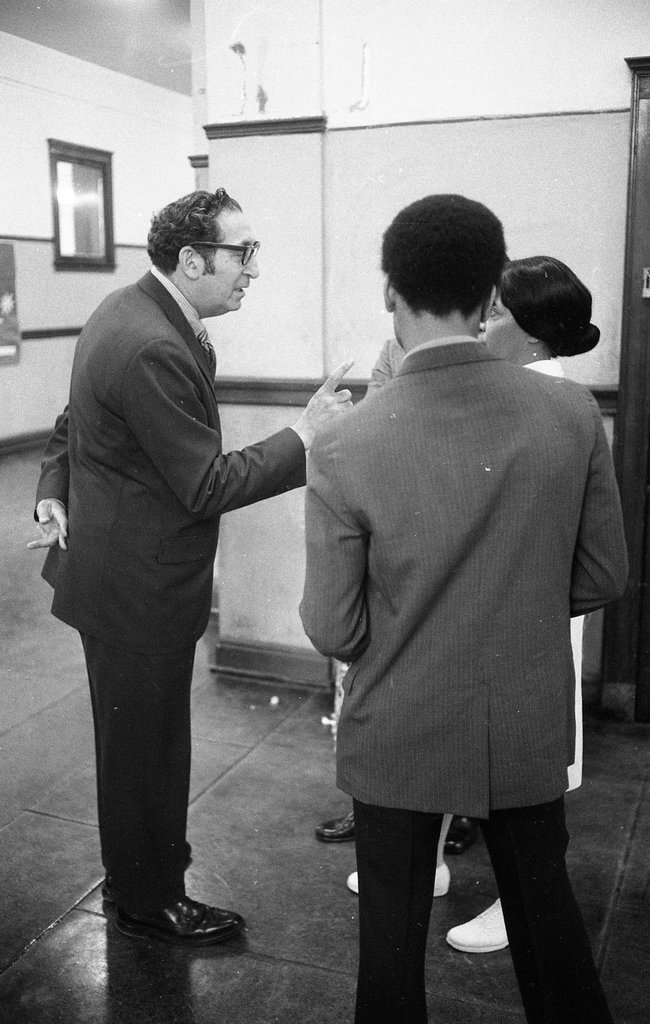
On May 12, 1971, District 10 School Superintendent Joseph Rosen scolds nurse Lois Webb for allowing the media into Penn Elementary to cover Sickle Cell Anemia testing. Observing is Ronald "Doc" Satchel. Had Nurse Webb not allowed the media in, these pictures would not exist. Photographer Duane Hall, ST-17100001-0029, Chicago Sun-Times collection, Chicago History Museum
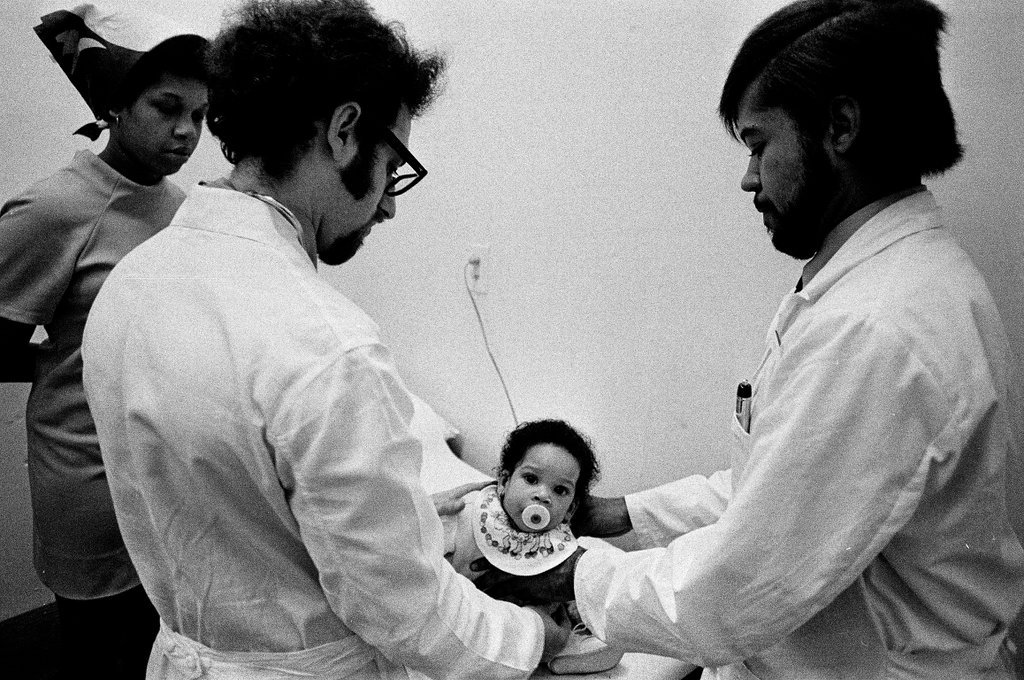
Patients were seen by general physicians, gynecologists, obstetricians, pediatricians, optometrists, and dentists. There were volunteer nurses, lab technicians, receptionists, and clerks. Photographer John White, December 10, 1970, ST-19030984-0028, Chicago Sun-Times collection, Chicago History Museum
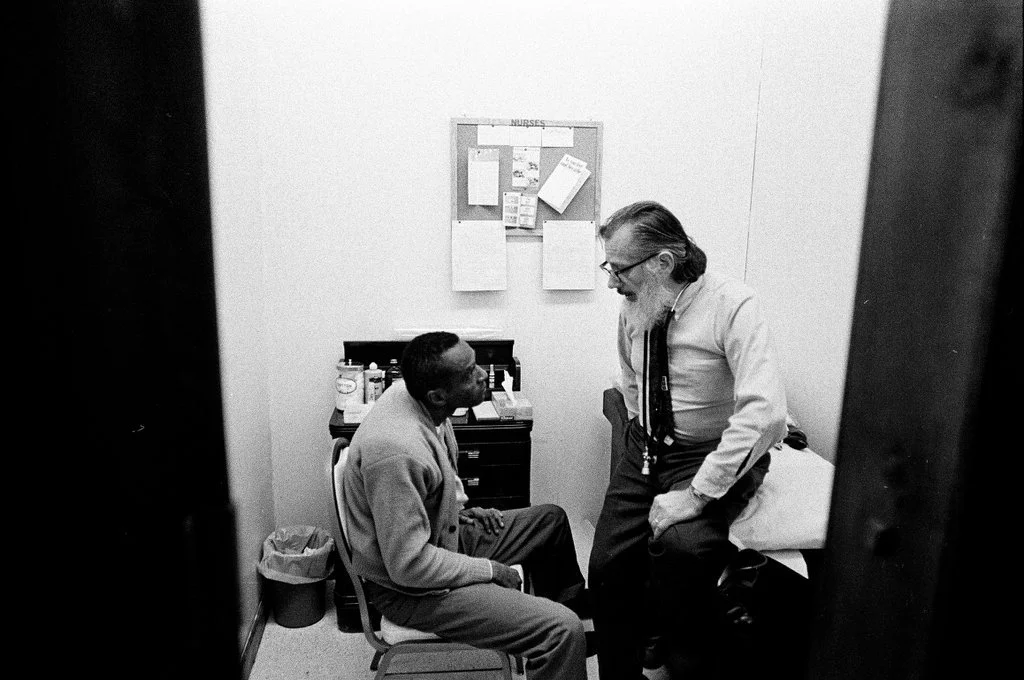
Dr. Eric Kast was the medical director of the clinic. The following is from the Chicago Reader on September 15, 1988, "Heal Thy Neighbor: The Calling of Dr. Eric Kast," by Robert McClory. "Like the Panthers’ food-giveaway program, the clinic bolstered the party’s credibility in the community, attracted a lot of media attention, and scared the hell out of Daley and other city officials. Kast recruited doctors and scrounged shamelessly from his contacts in the medical community for donations of supplies and prescription drugs. Patients flocked in. ‘It was strictly a Marxist clinic,’ says Kast. ‘The emphasis was on making people aware of class struggle, and there was no idea of spirituality whatsoever. But still the poor were being served." Photograph: December 10, 1970, Photographer John White, ST-19030984-0023, Chicago Sun-Times collection, Chicago History Museum
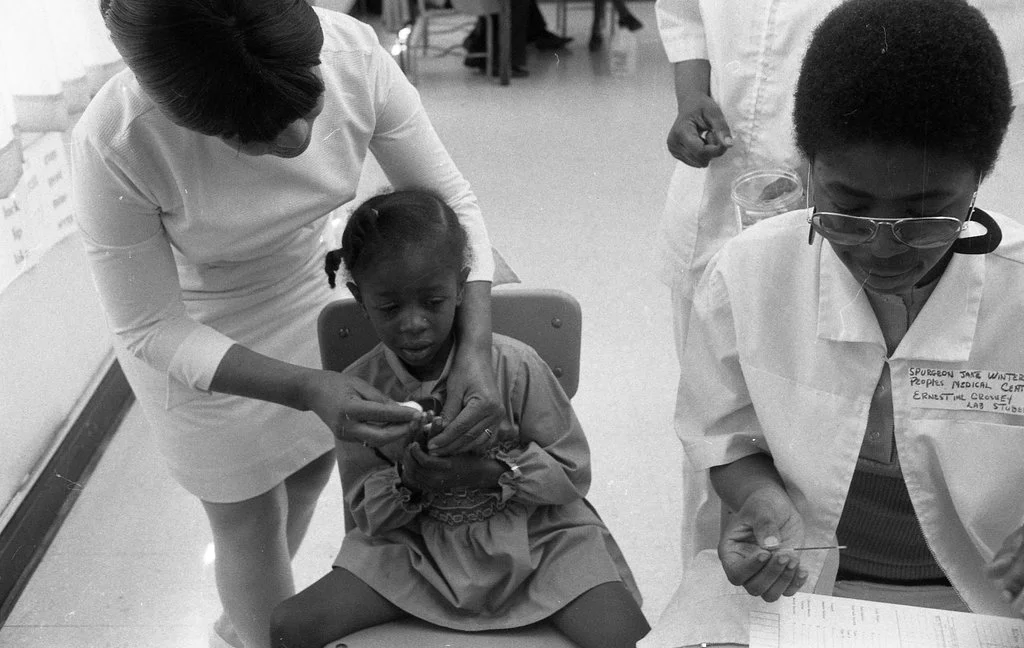
Panther Ernestine Crossley, Co-Coordinator of the clinic, was a lab student being trained to do screenings with Nurse Lois Webb at Penn Elementary. May 12, 1971, Photographer Duane Hall, ST-17100001-0023, Chicago Sun-Times collection, Chicago History Museum