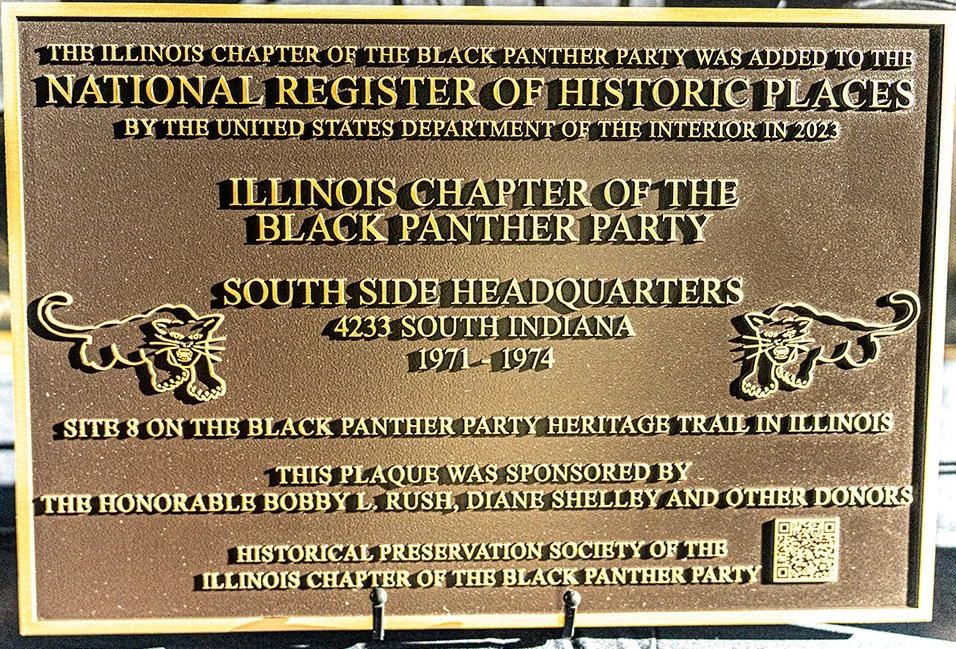
Black Panther Party Heritage Trail in Illinois
Site 8
South Side Headquarters
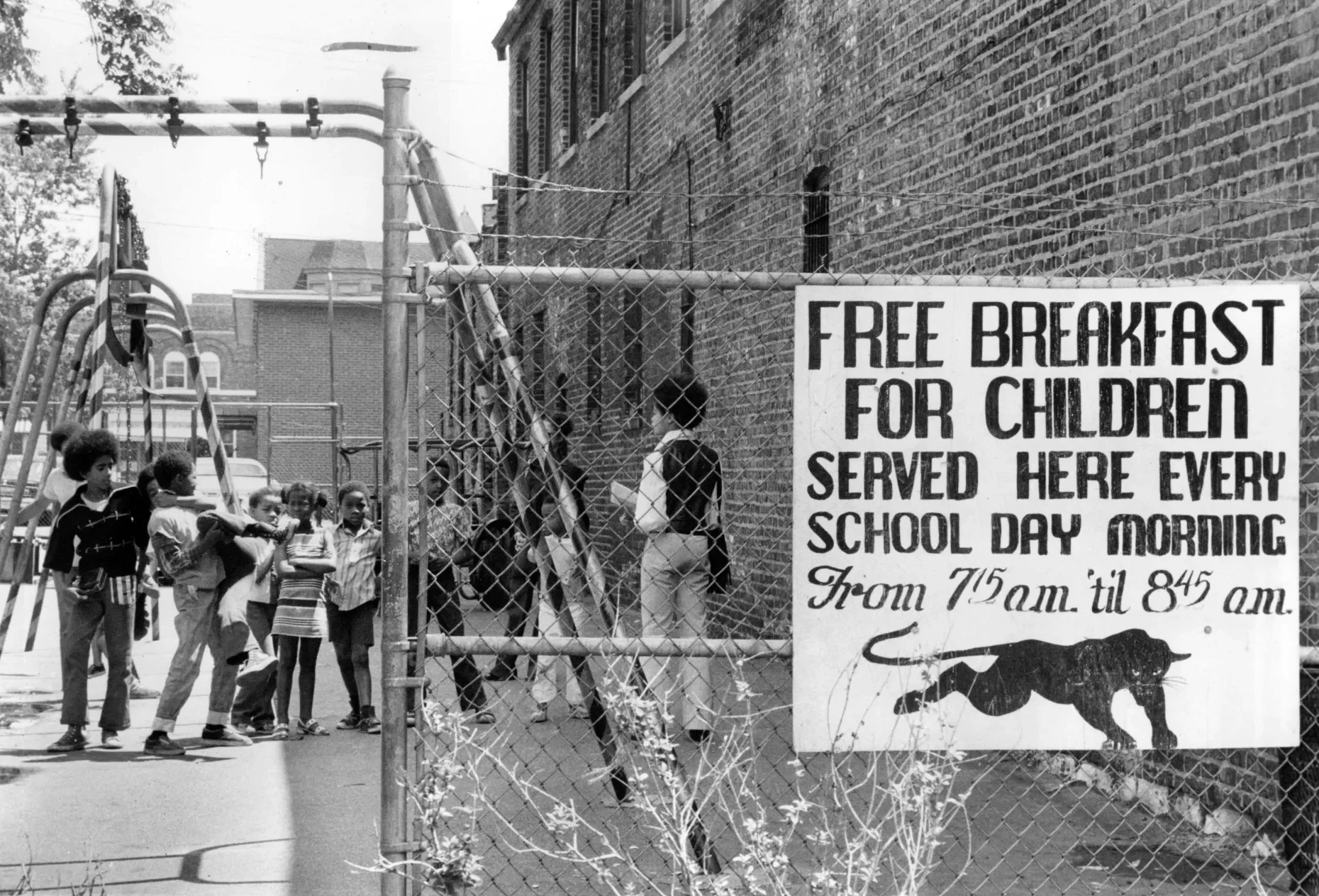
Photo: Playlot next to the South Side Headquarters at 4233 S. Indiana, July 28, 1972, Photographer Quentin Dodt, Chicago Tribune
Site 8
Name
South Side Headquarters
Location
4233 S. Indiana, Chicago, IL 60653, Bronzeville
Historical Period of Significance
1971-1974.
Original Structure
Demolished.
Panther Activities
Community Organizing
Free Breakfast for Children Program
Historical Marker Installation Status
Not yet installed.
Site 8: South Side Headquarters
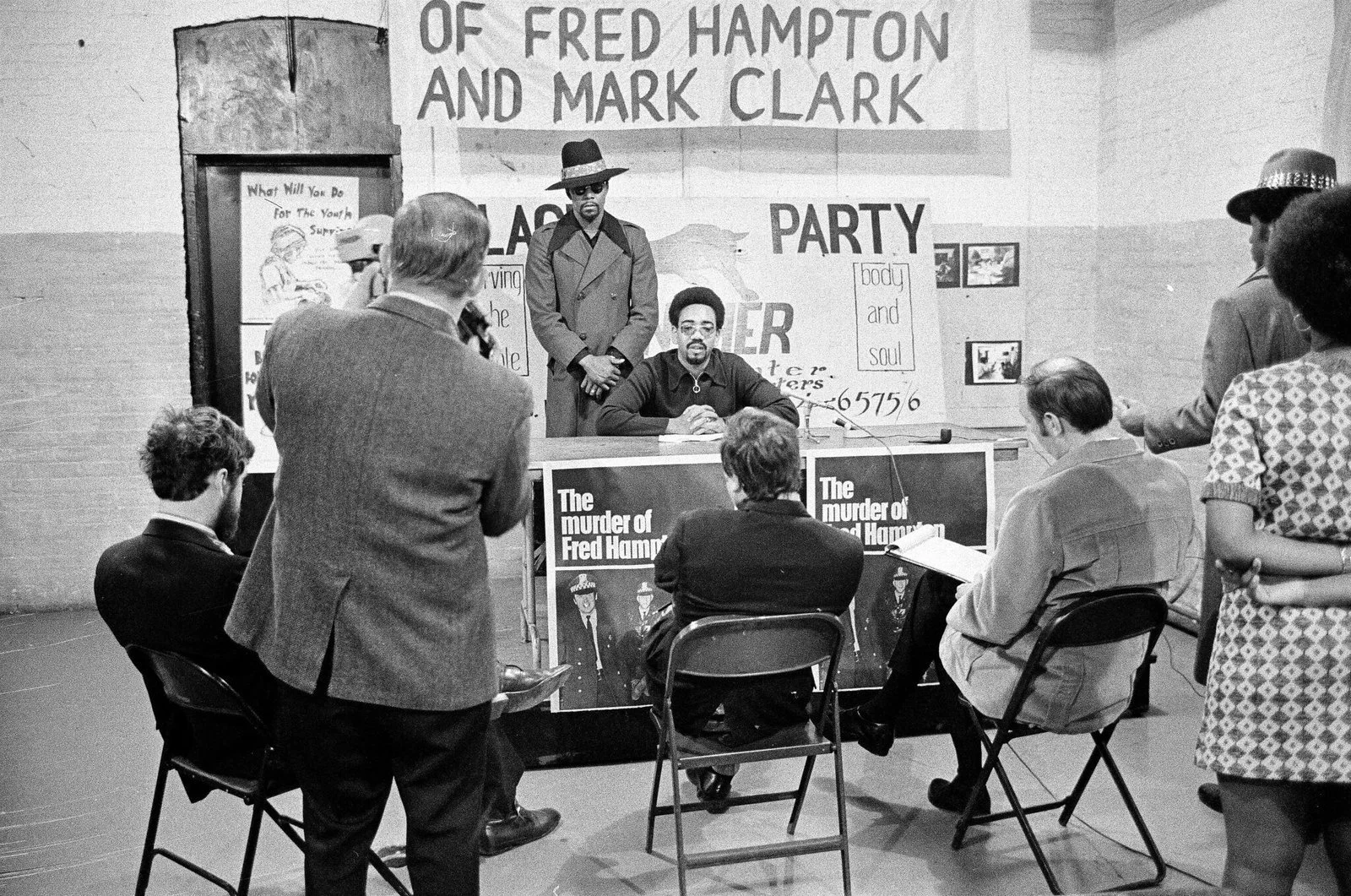
The Illinois Chapter launched an all-out campaign to prevent State’s Attorney Edward V. Hanrahan from being reelected. Leader Bobby Rush details the initiative to press on December 23, 1971, ST-19030958-0010, Chicago Sun-Times collection, Chicago History Museum
The Black Commitment
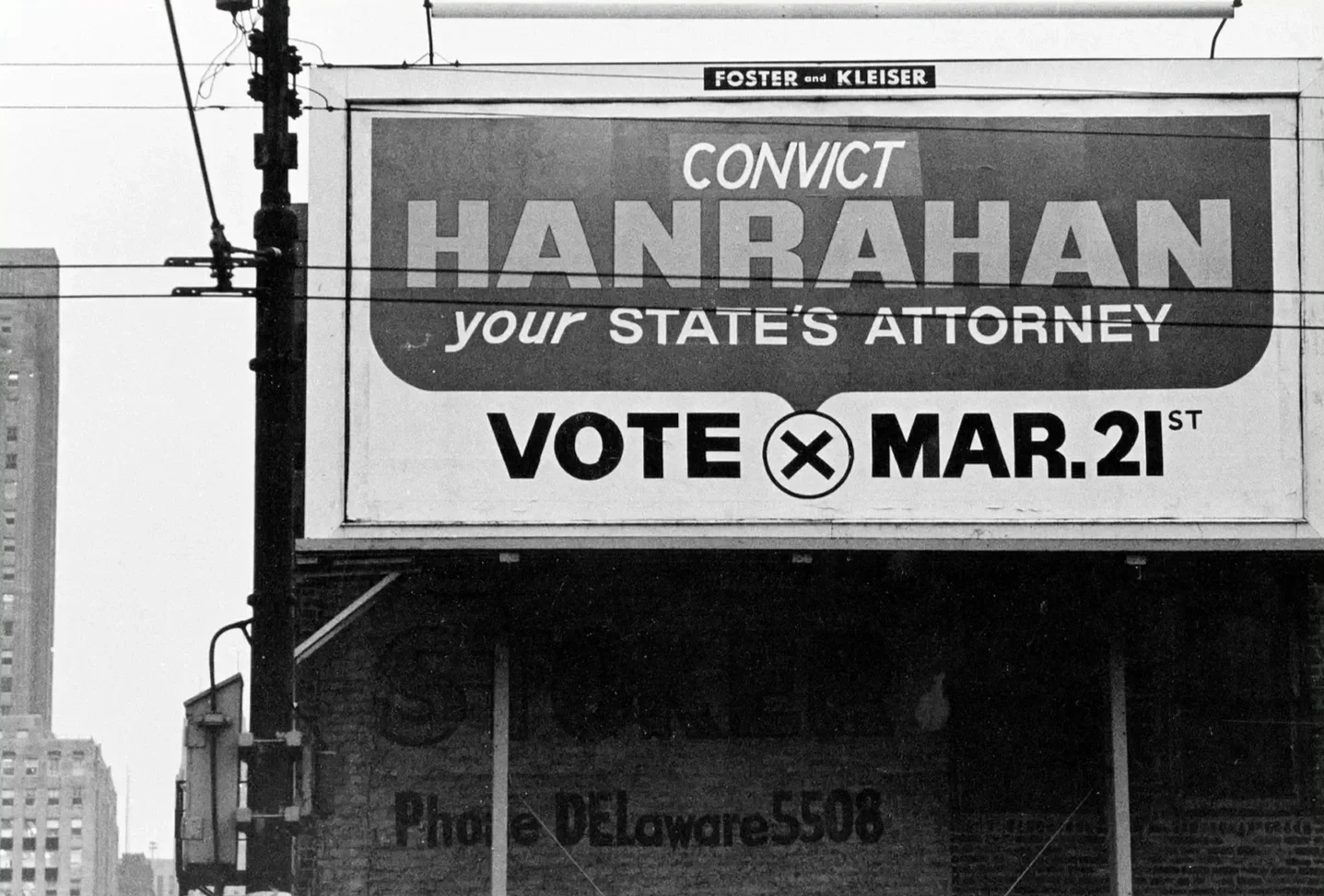
Billboard from The Black Commitment during the March 21, 1972, Democratic Primary election season to unseat Edward V. Hanrahan. Photographer Paul Sequeira, Getty Images
In 1971, the Illinois Chapter moved its headquarters to Chicago's South Side. The West Side location was still used for operations such as newspaper distribution.
After the criminal trial against State’s Attorney Edward V. Hanrahan and his Chicago police detail ended in acquittal, the Illinois Chapter launched “The Black Commitment,” an all-out campaign to prevent his reelection.
It read:
Because I recognize how urgent it is for all Black people to unite for our common cause, I do hereby make it known that I support the following objectives and will do all I can to bring them about.
The defeat of Edward V. Hanrahan in his efforts to regain office in the November election.
The elimination of police brutality and murder against Black people.
The creation of positive programs to bring to Black people the power to control our own destiny.
Hanrahan was rumored to be a shoo-in successor to Chicago mayor Richard J. Daley and the Democratic Machine. Daley withdrew support of Hanrahan, and over 30,000 people signed The Black Commitment.
In the November 1972 election, black voters broke ranks with the Democratic Party, voted Republican in the next election, and Hanrahan was defeated.
Free Bus to Prison Program
The Black Panther Newspaper, June 19, 1972
The BPP referred to the United States prison system as “the most wretched and inhumane of any that can be found in the world...” Studies had shown that imprisonment rates for Blacks were significantly higher than whites: “In 1960, the white male incarceration rate was 262 per 100,000 white U.S., and the black male rate was 1,313, meaning that black men were five times as likely as white men to be incarcerated.” Similar disparities occurred among other oppressed, working-class, and over-policed neighborhoods.
In response, the ILBPP instituted the Free Bussing to Prison Program in 1971. “No longer will a Brother or Sister be quietly tucked away in some ‘adjustment hole’ to be heard from no more. The people from the community, the people who care will be there every week because there is now a People’s Bus that will now guarantee it.”
After meeting Bobby Rush in 1970, Irving Thalberg, Jr. purchased a 15-year-old Greyhound and donated it to the Illinois Chapter. The bus could seat 39 passengers and had air conditioning and a bathroom. The bus ran a regular, dependable schedule every Sunday, visiting two prisons weekly. It left from the west-side headquarters and the south-side office, and the program continued after the Illinois Chapter ceased operations in 1974..
PHOTOS
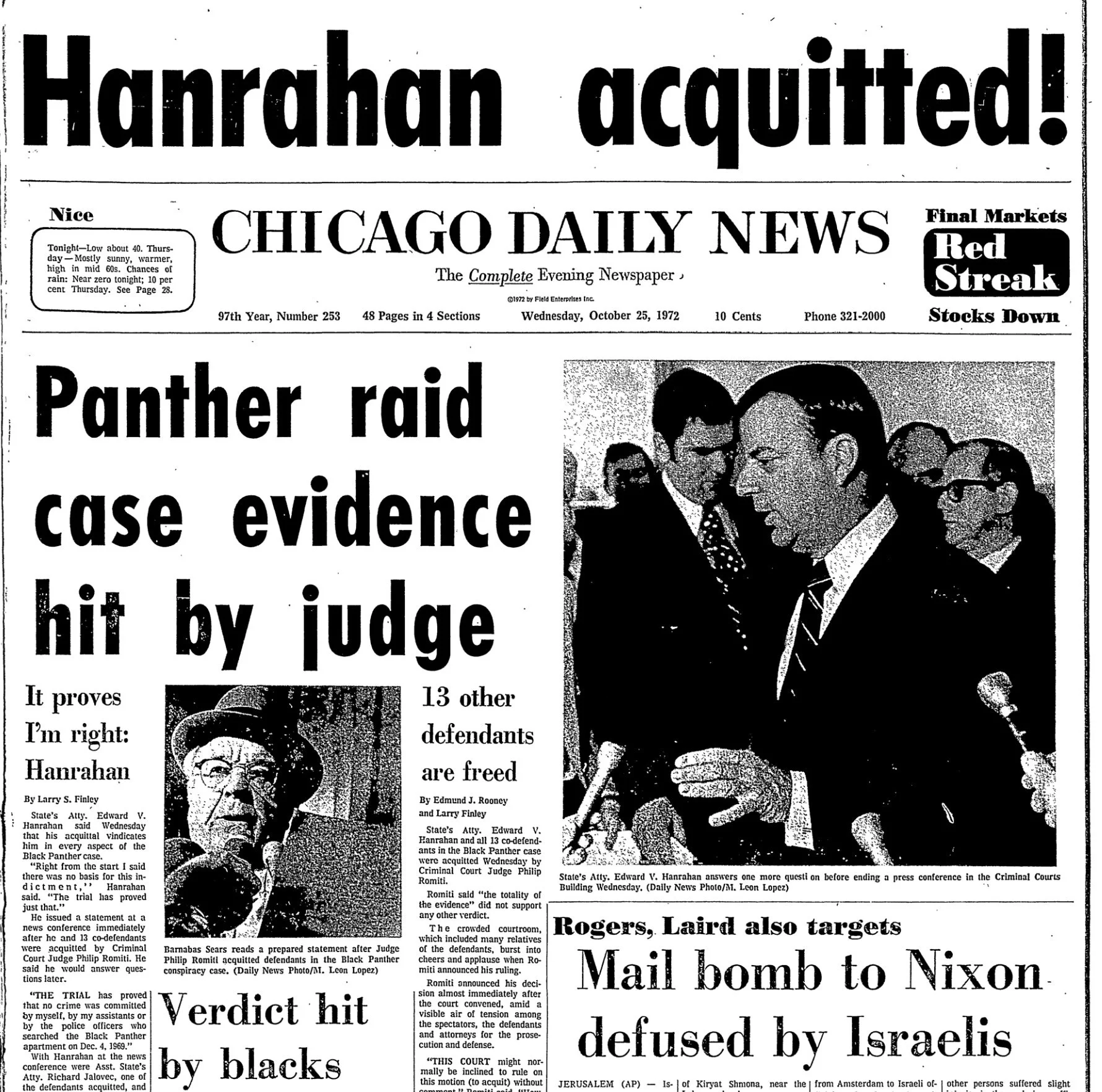
Source: Roseland, Chicago: 1972, Substack
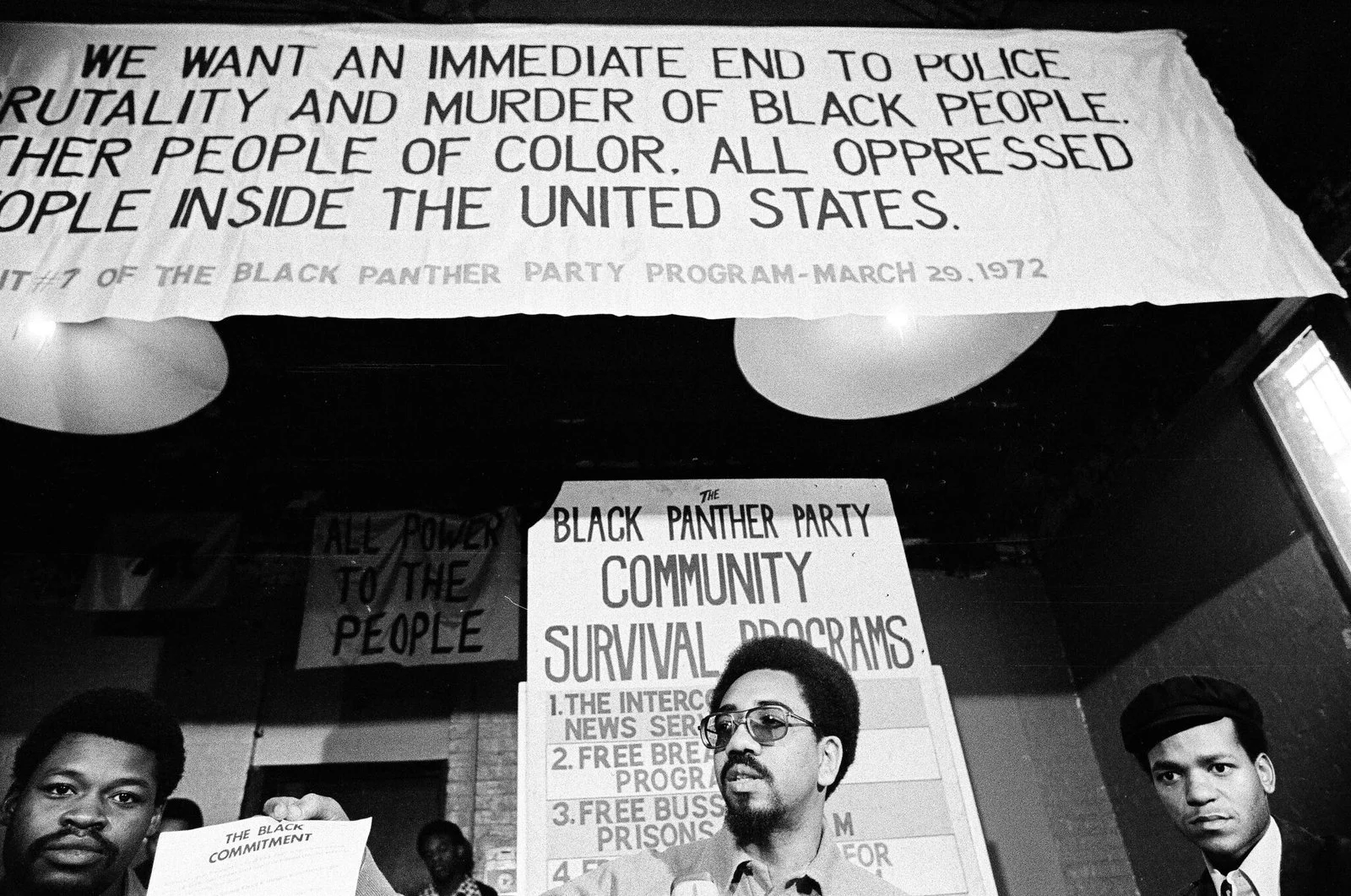
Bobby Rush holds The Black Commitment petition at 4233 S. Indiana, Photographer Fred Stein, October 26, 1972, ST-19030979-0008, Chicago Sun-Times collection, Chicago History Museum
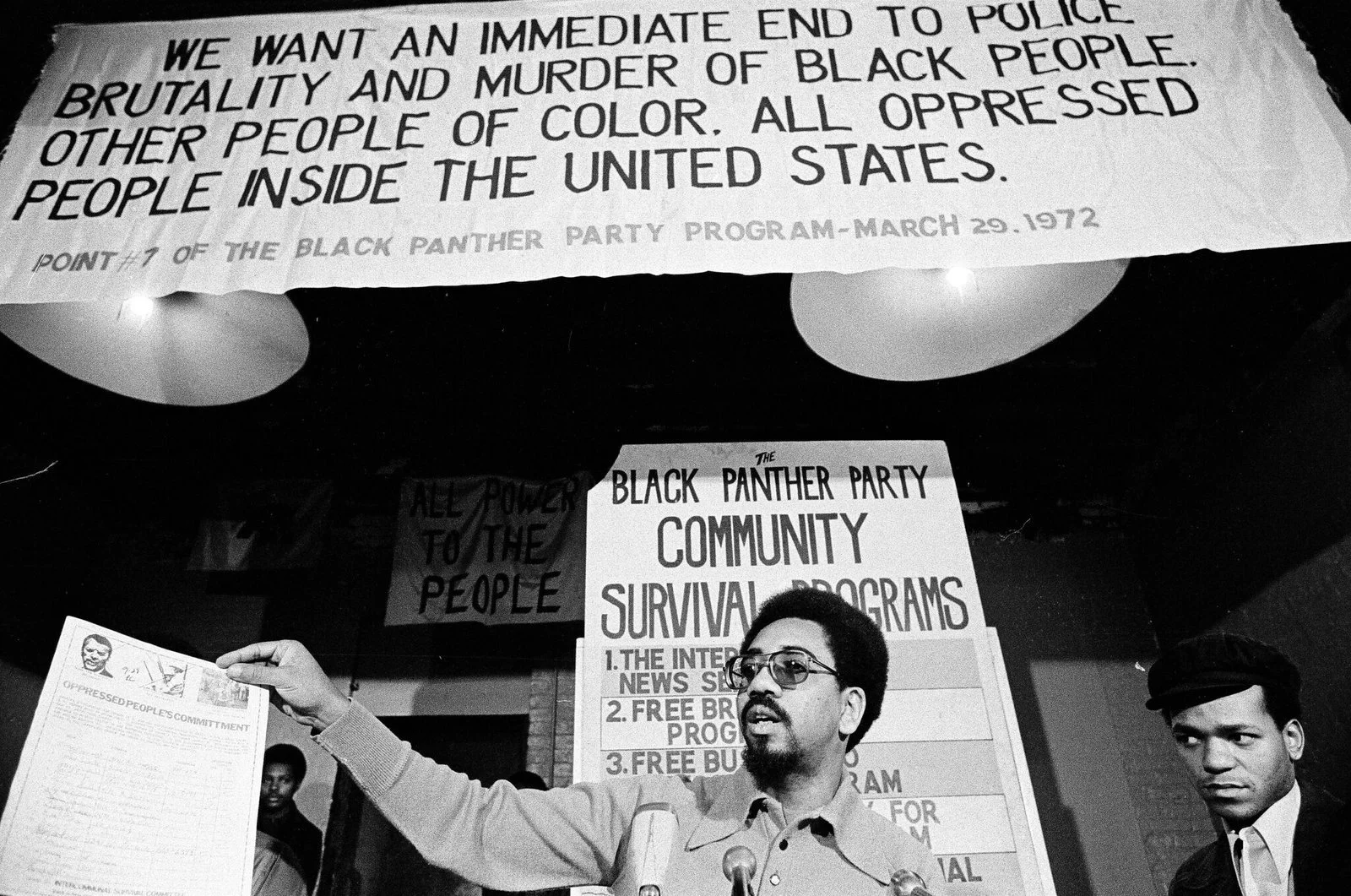
Bobby Rush holds The Oppressed People's Commitment petition at 4233 S. Indiana, Photographer Fred Stein, October 26, 1972, ST-19030979-0007, Chicago Sun-Times collection, Chicago History Museum
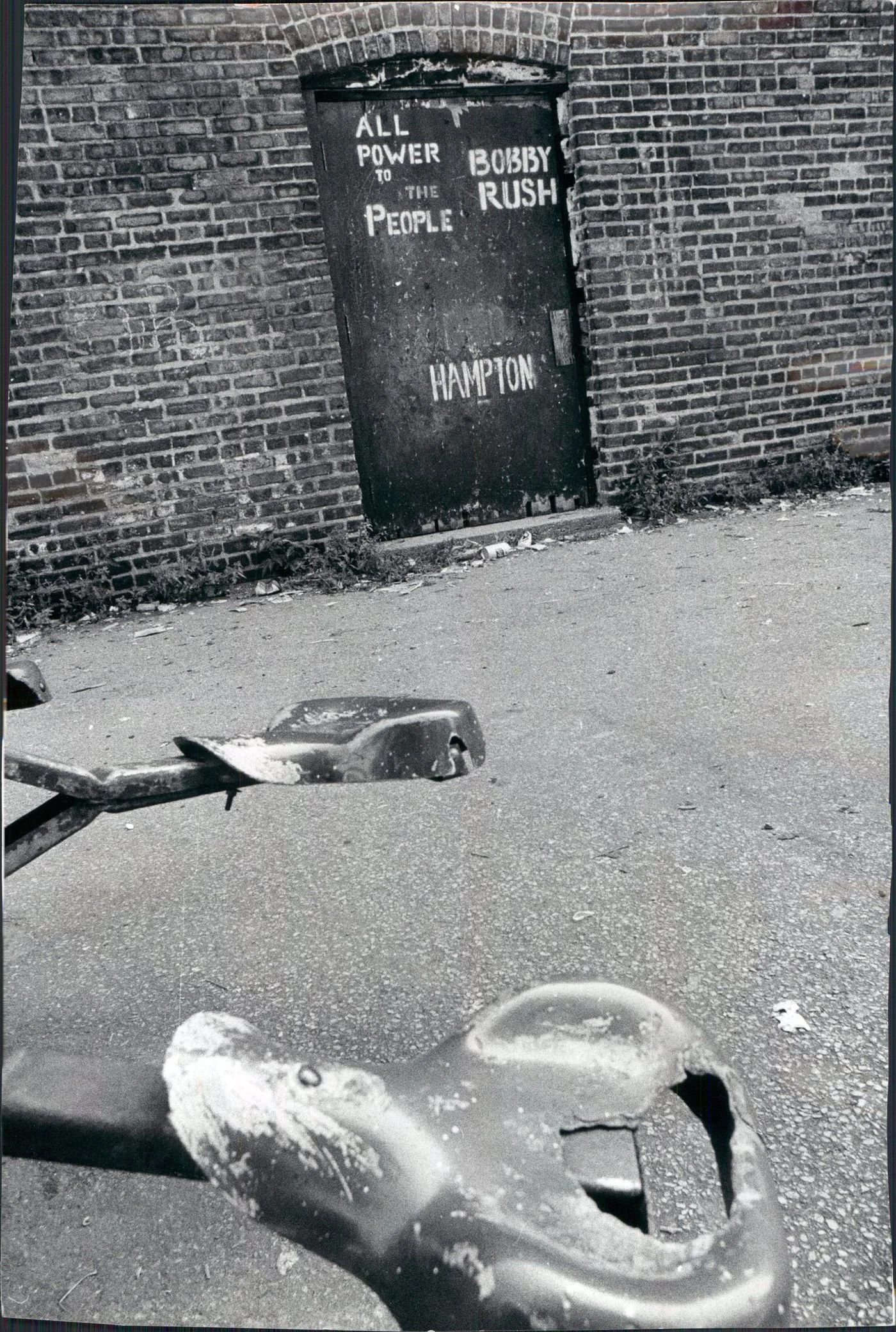
Photograph of 4233 S. Indiana after the Illinois Chapter ceased operations, Sept. 16, 1974. Photographer Ernie Cox Jr., Chicago Tribune
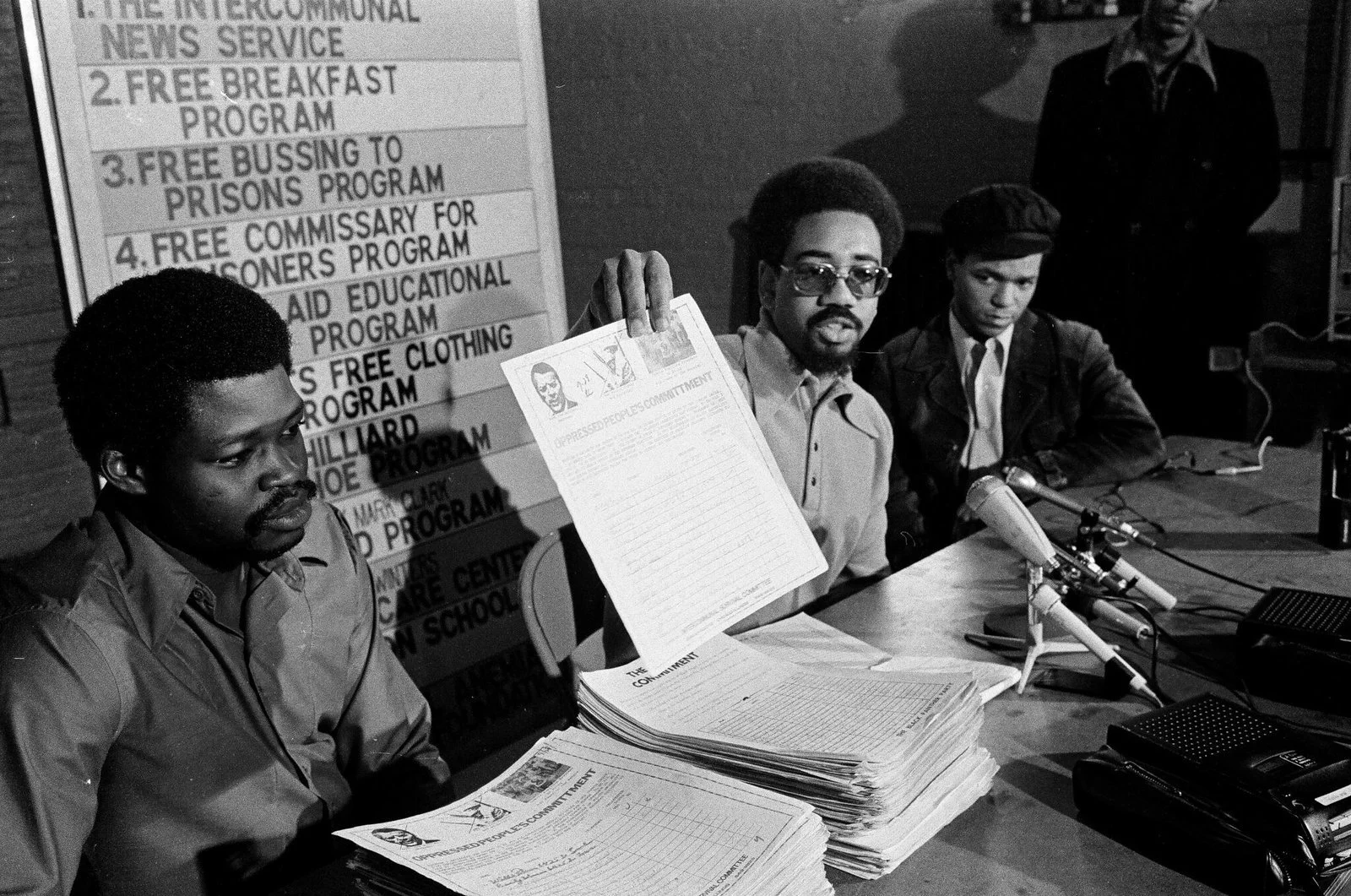
Two stacks of petitions to unseat Hanrahan. (l-r) Harold Bell, Bobby Rush, Ronald "Doc" Satchel at 4233 S. Indiana, Photographer Fred Stein, ST-19030964-0014, Chicago Sun-Times collection, Chicago History Museum
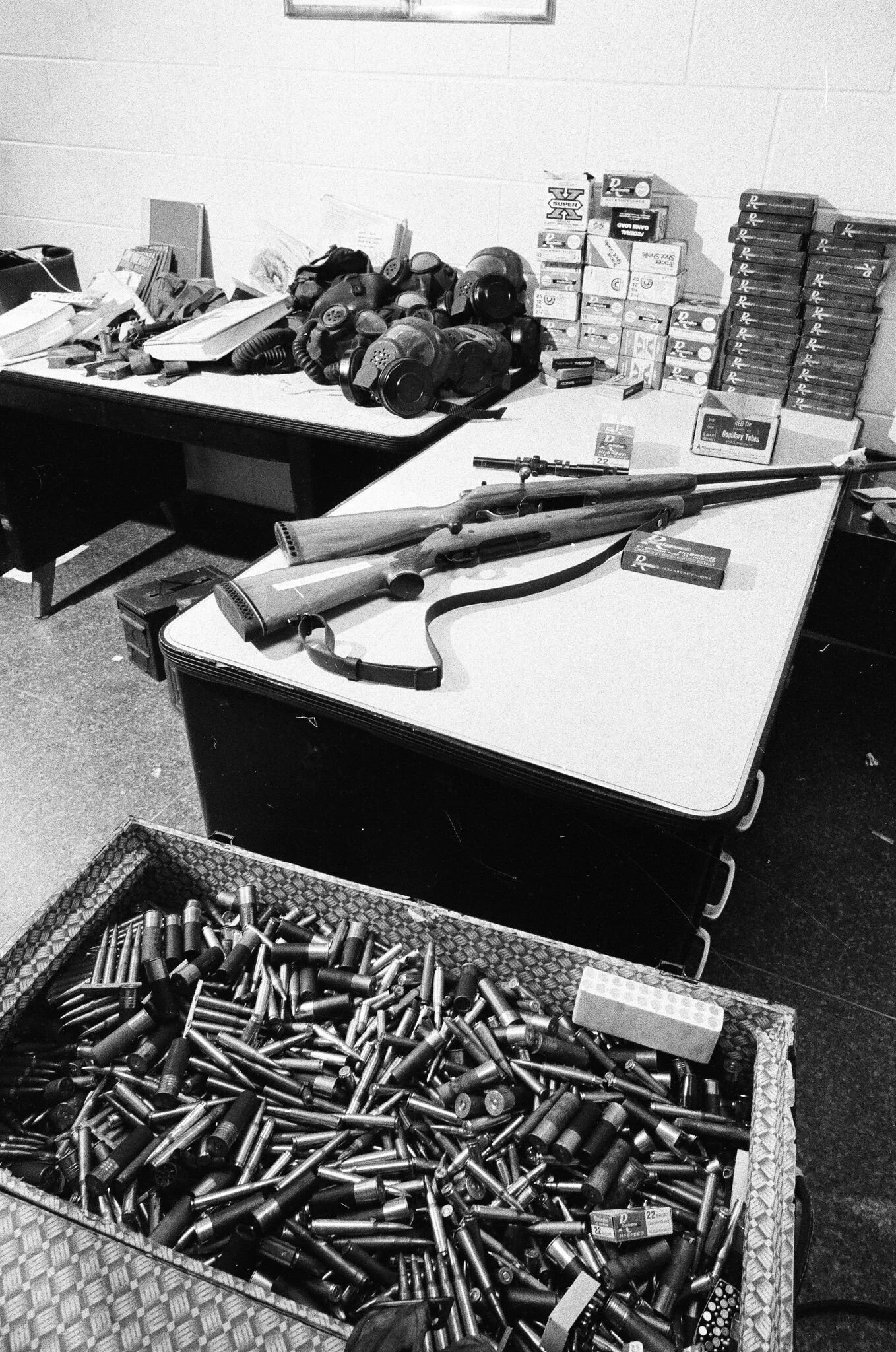
Guns and ammunition confiscated during a raid of the South Side headquarters. Photo: April 25, 1974, ST-19030977-0003, Chicago Sun-Times collection, Chicago History Museum
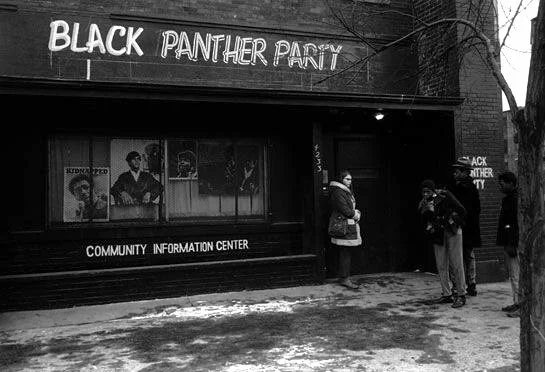
Outside the South Side headquarters. Photographer Unknown, source of photograph is the Young Patriots Organization
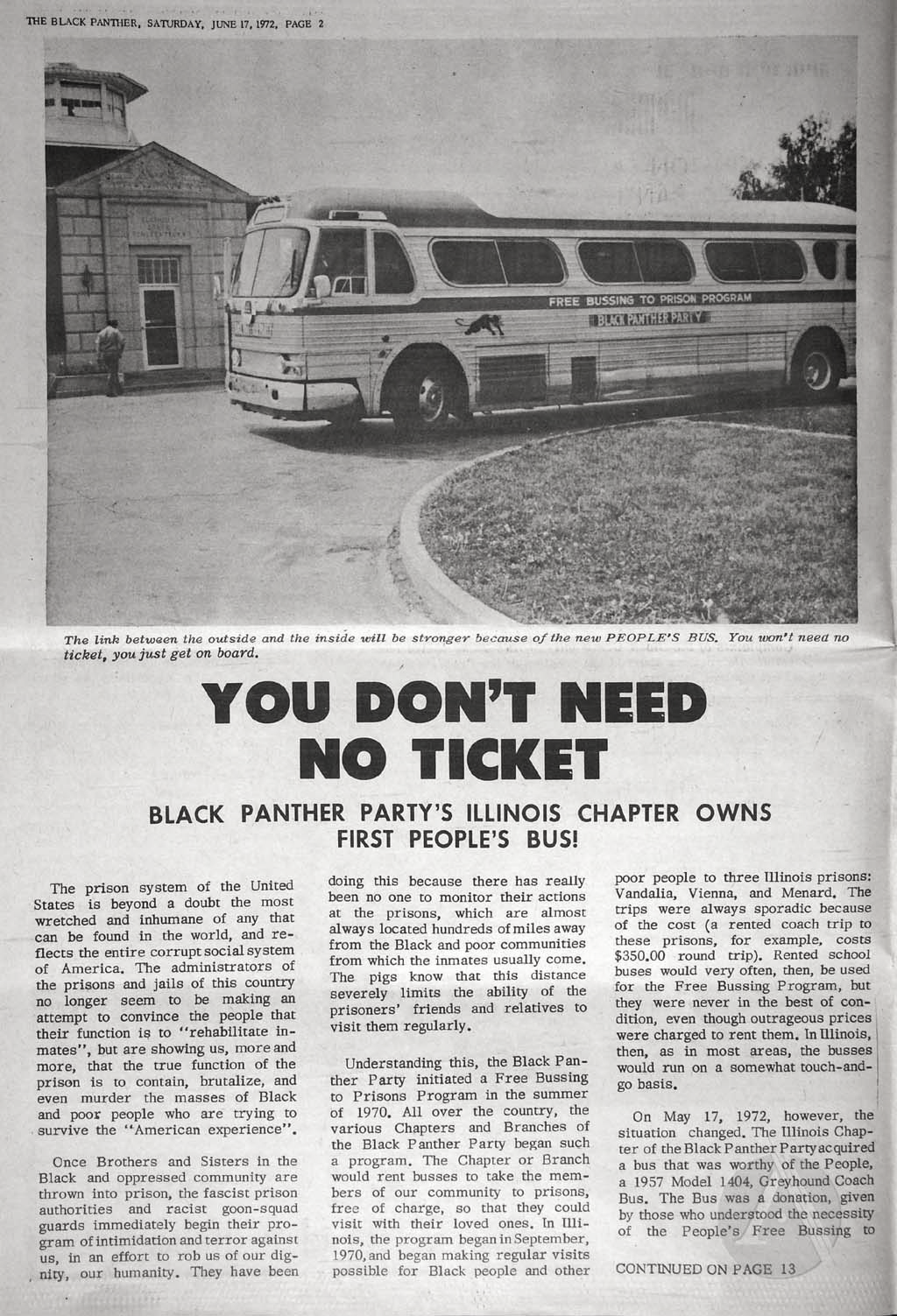
Story on the Illinois Chapter's Free Bus to Prison Program, The Black Panther Newspaper, June 19, 1972
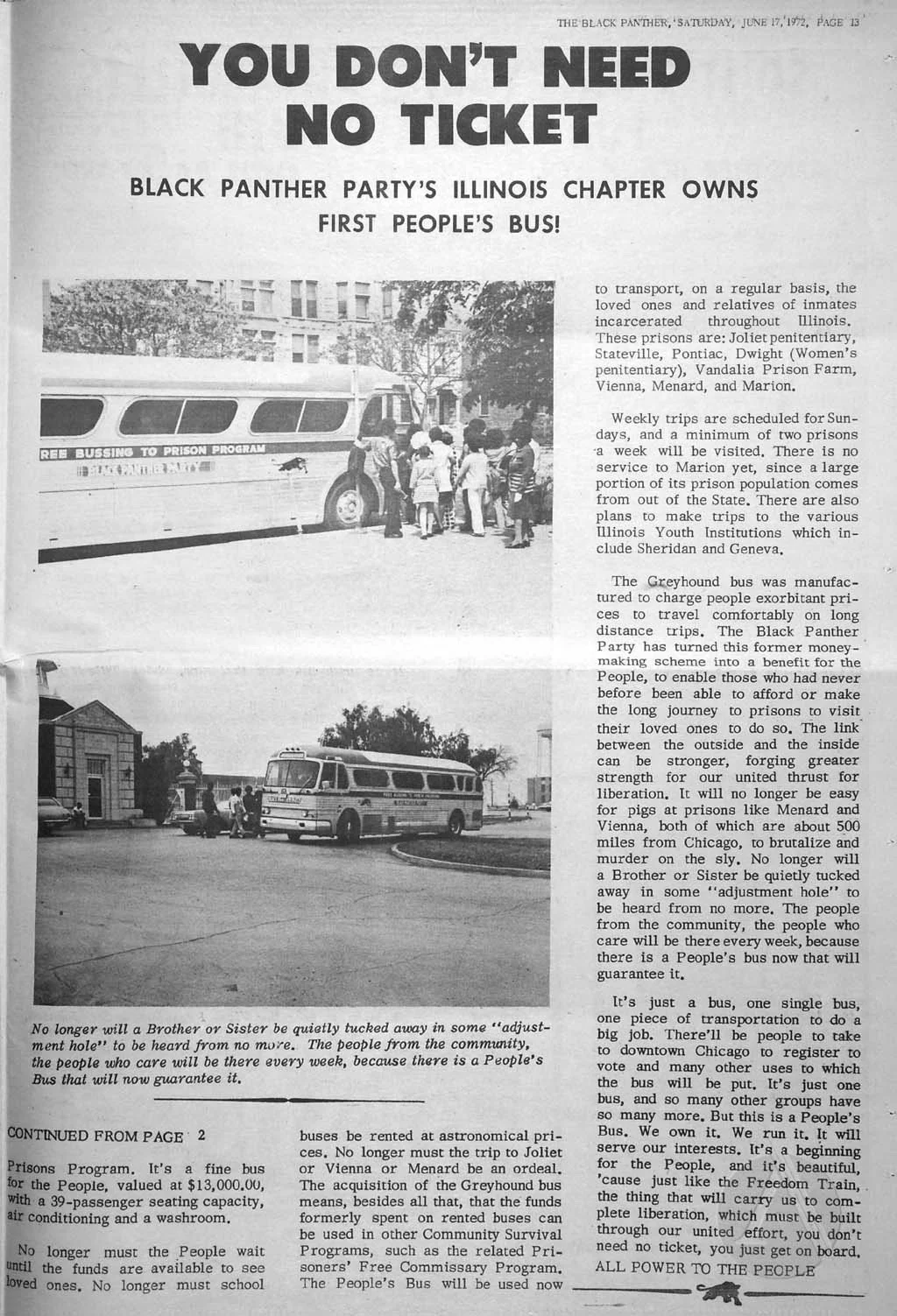
Story on the Illinois Chapter's Free Bus to Prison Program, The Black Panther Newspaper, June 19, 1972
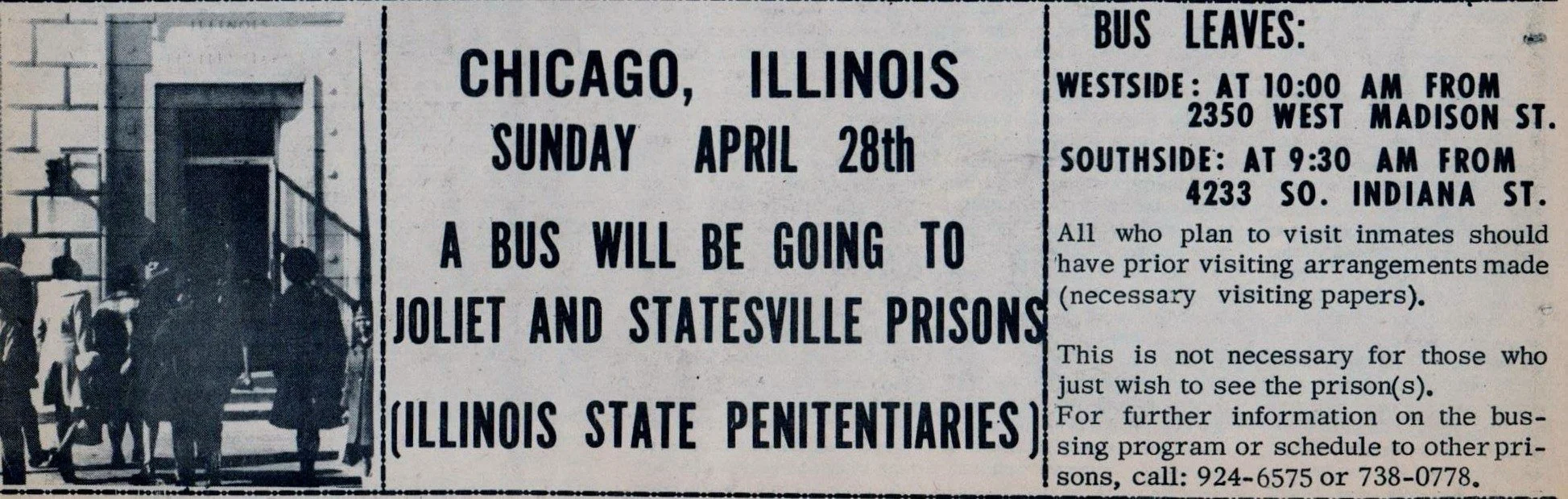
Story on the Illinois Chapter's Free Bus to Prison Program, The Black Panther Newspaper, June 19, 1972
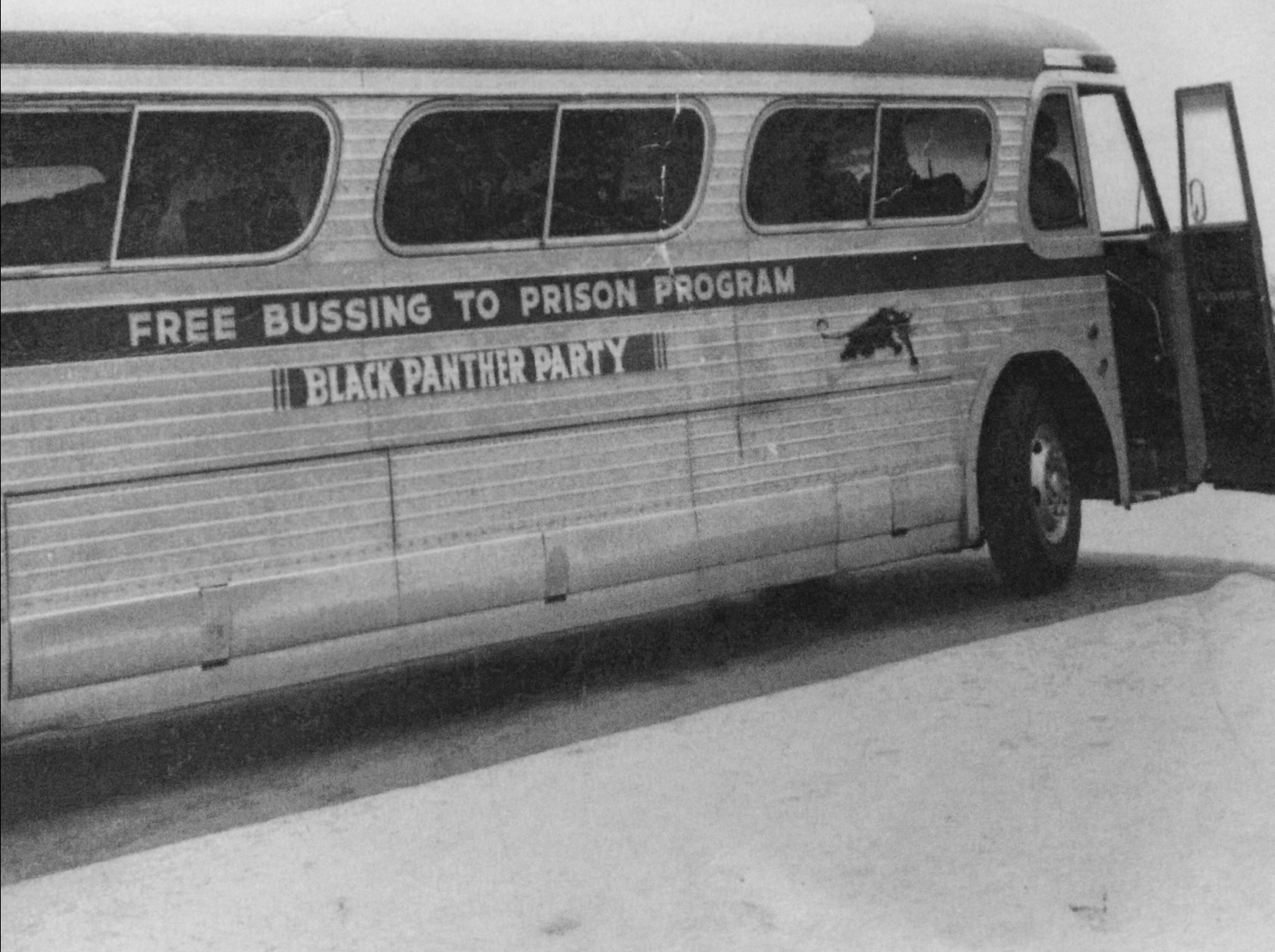
Story on the Illinois Chapter's Free Bus to Prison Program, The Black Panther Newspaper, June 19, 1972