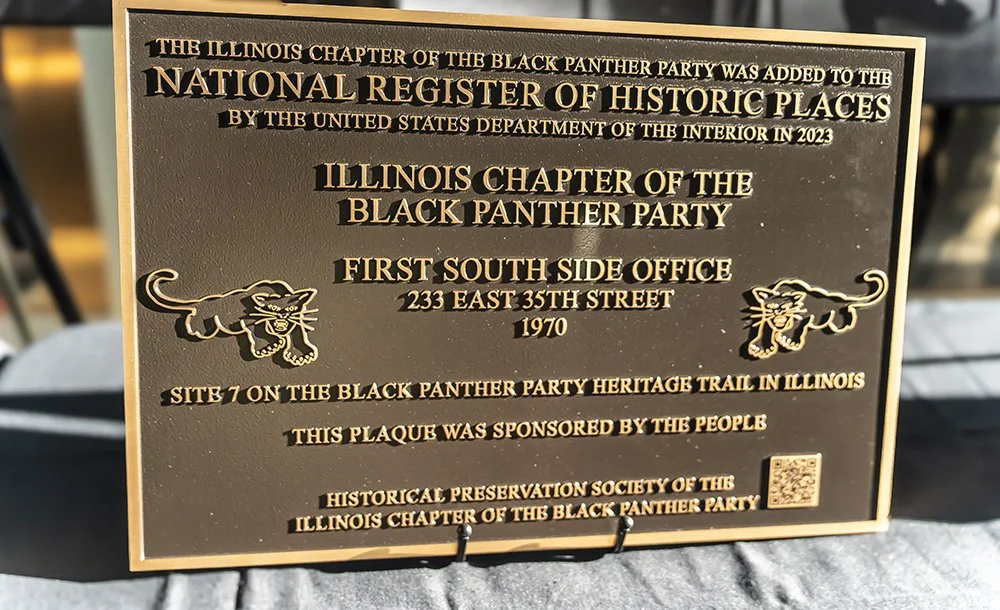
Black Panther Party Heritage Trail in Illinois
Site 7
First Southside Office, National Committee to Combat Fascism Community Center
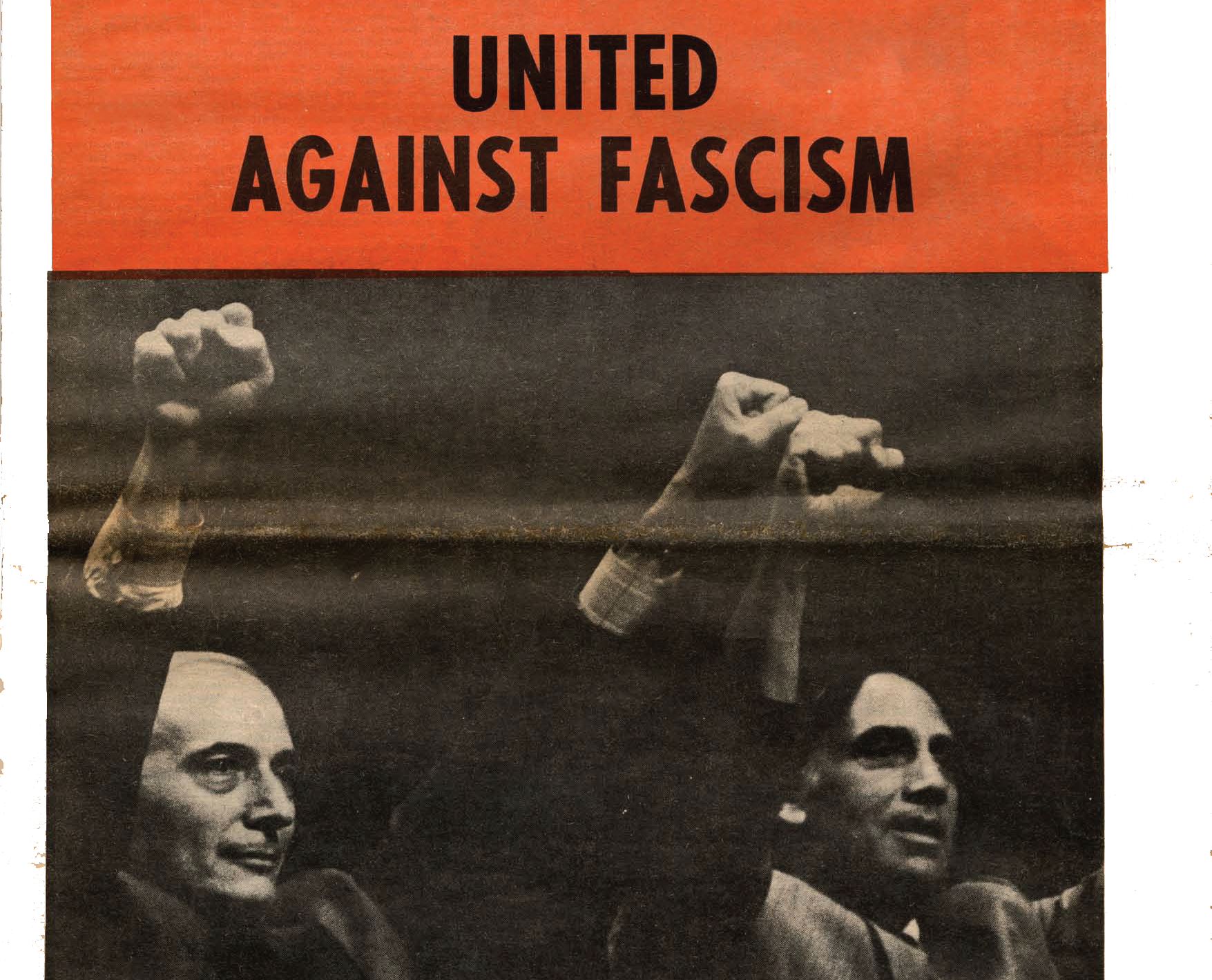
Photo: (l-r)Attorneys Charles R. Garry and William Kunstler at the United Front Against Fascism Conference are featured on the cover page of “The Black Panther” newspaper on July 26, 1969, marxists.org
Site 7
Name
First South Side Office, National Committee to Combat Fascism Community Center (NCCF).
Location
253 E. 35th Street, Chicago, IL 60616, Bronzeville
Historical Period of Significance
1970-1974.
Original Structure
Demolished
Panther Activities
Community Organizing
Historical Marker Installation Status
Not yet installed.
Site 7: First South Side Office, National Committee to Combat Fascism Community Center
“The Black Panther” newspaper on July 19, 1969, marxists.org
The Black Panther Party launched a national initiative to organize people and groups in the fight against what it viewed as rising fascism and repression. This led up to the United Against Fascism conference in Oakland in July 1969.
Chapters and branches began opening community centers under the name National Committee to Combat Fascism (NCCF) and, in Chicago, the first NCCF office was also the first Panther office on the South Side.
These offices were to be started by the Party and then taken over by the community. It was during this time that the term “Community Worker” began. The title “Community Worker” became more prevalent later in 1969 when government infiltration became obvious, and members were purged and had to earn the title “Panther” back.
To further organize the larger community, in 1970, Minister of Defense Huey P. Newton introduced “Revolutionary Intercommunalism.”
Speech excerpt from Boston College, November 18 1970:
“In 1966 we called our Party a Black Nationalist Party. We called ourselves Black Nationalists because we thought that nationhood was the answer. Shortly after that we decided that what was really needed was revolutionary nationalism, that is, nationalism plus socialism. After analyzing conditions a little more, we found that it was impractical and even contradictory. Therefore, we went to a higher level of consciousness.
“We saw that in order to be free we had to crush the ruling circle and therefore we had to unite with the peoples of the world. So we called ourselves Internationalists. We sought solidarity with the peoples of the world. We sought solidarity with what we thought were the nations of the world. But then what happened? We found that because everything is in a constant state of transformation, because of the development of technology, because of the development of the mass media, because of the fire power of the imperialist, and because of the fact that the United States is no longer a nation but an empire, nations could not exist, for they did not have the criteria for nationhood.
“Their self‐ determination, economic determination, and cultural determination has been transformed by the imperialists and the ruling circle. They were no longer nations. We found that in order to be Internationalists we had to be also Nationalists, or at least acknowledge nationhood. Internationalism, if I understand the word, means the interrelationship among a group of nations. But since no nation exists, and since the United States is in fact an empire, it is impossible for us to be Internationalists.
“These transformations and phenomena require us to call ourselves ‘intercommunalists’ because nations have been transformed into communities of the world. The Black Panther Party now disclaims internationalism and supports intercommunalism.
“Marx and Lenin felt, with the information they had, that when the non‐state finally came to be a reality, it would be caused or ushered in by the people and by communism.
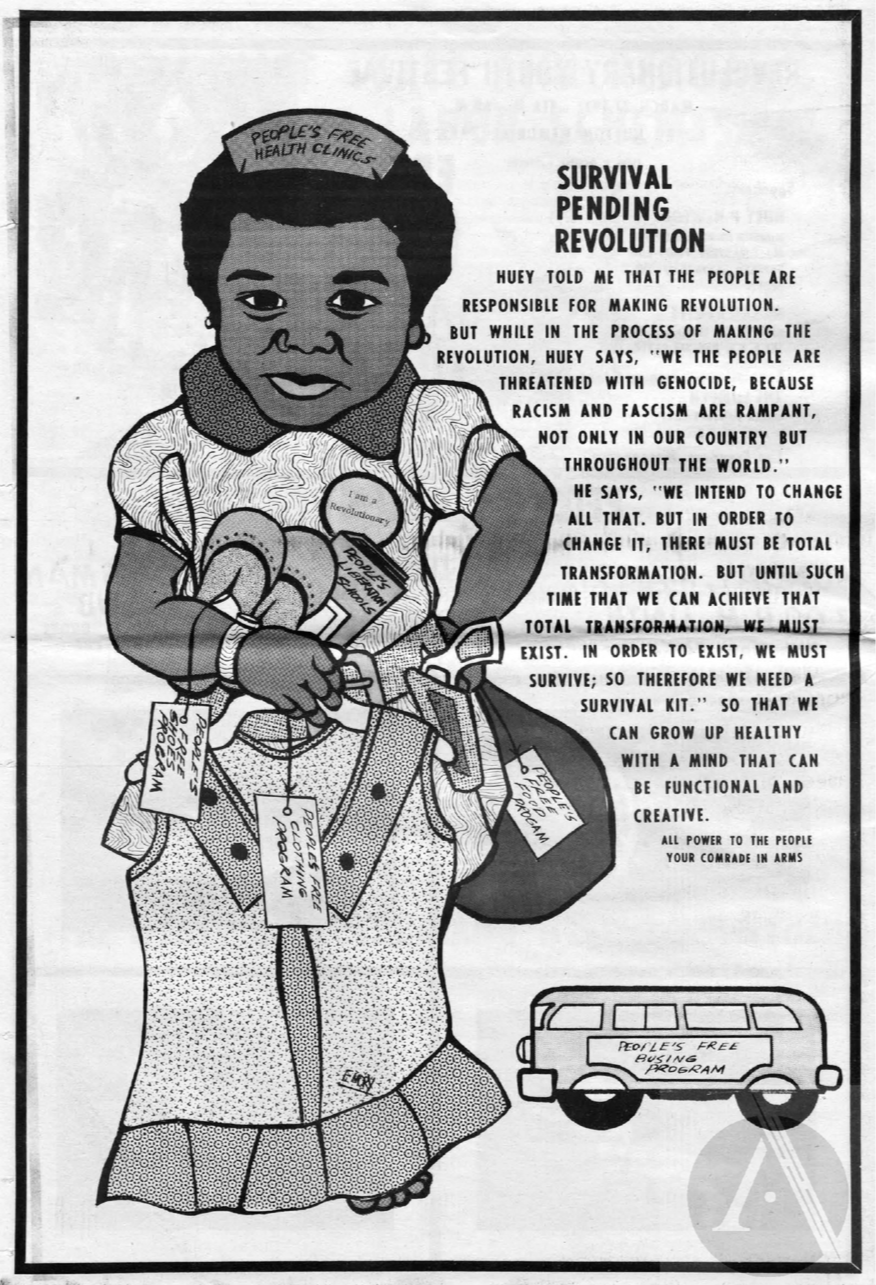
“The Black Panther” newspaper, March 20, 1971
“A strange thing happened. The ruling reactionary circle, through the consequence of being imperialists, transformed the world into what we call “Reactionary Intercommunalism.” They laid siege upon all the communities of the world, dominating the institutions to such an extent that the people were not served by the institutions in their own land.
The Black Panther Party would like to reverse that trend and lead the people of the world into the age of “Revolutionary Intercommunalism.”This would be the time when the people seize the means of production and distribute the wealth and the technology in an egalitarian way to the many communities of the world.” ––Huey P. Newton
Newton continued to focus the Party on its Survival Programs, with the phrase “Survival Pending Revolution.” Newton did not believe the people were ready for armed struggle, while other Party members, such as Eldridge Cleaver, wanted to engage in guerrilla warfare and armed resistance against the United States government. This ideological split led to Cleaver and a faction of the BPP being expelled from the Party in 1971. Cleaver criticized Newton and the Party as being reformists.
In 1972, the Party held a Black Community Survival Conference with the motto, “A Chicken in Every Bag.” A goal of the NCCF was Community Control of the Police. The Illinois Chapter wrote a resolution to this end and continued organizing around this initiative for several years, and gained significant momentum in 1973 with a local conference.
PHOTOS
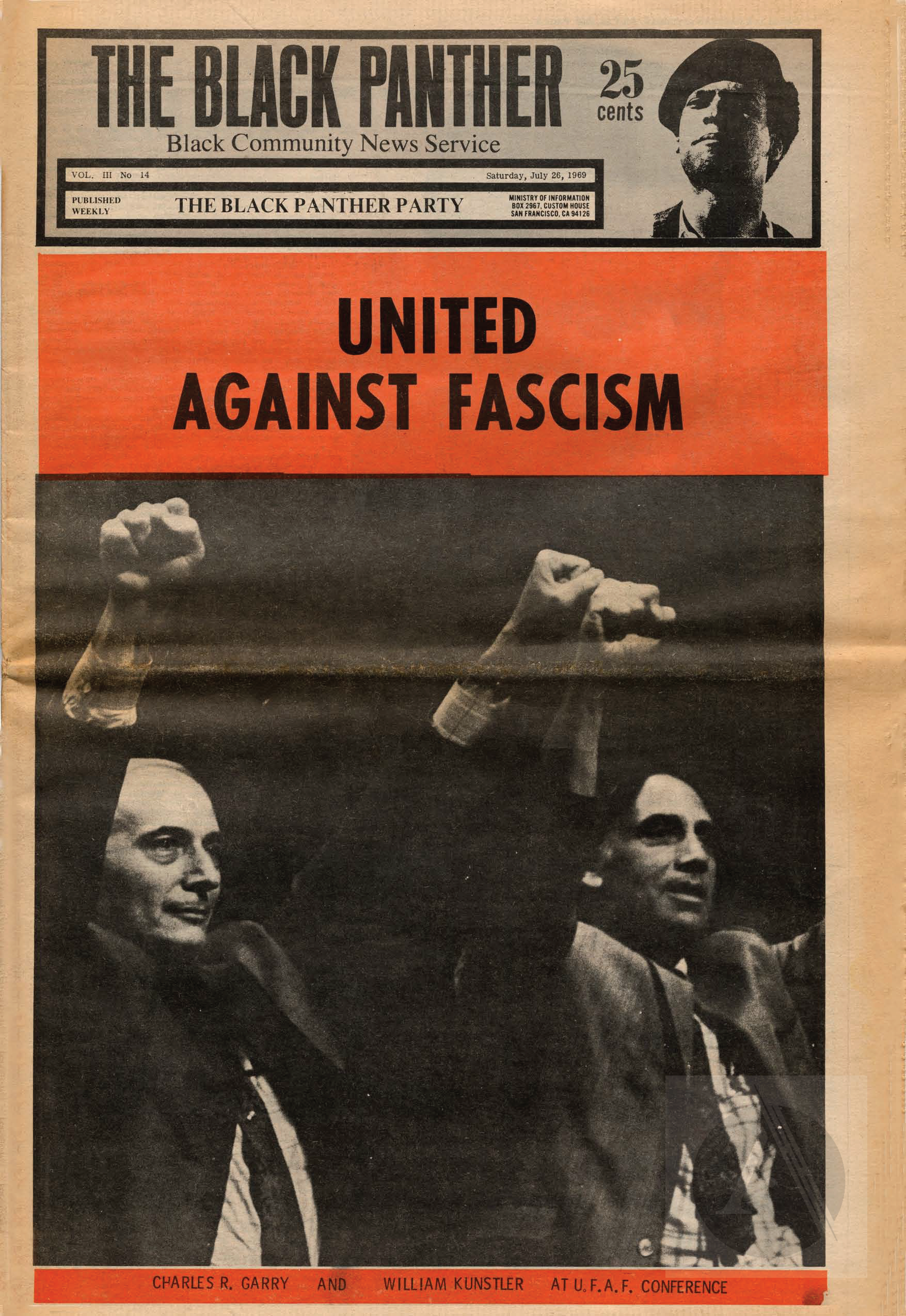
“The Black Panther” newspaper on July 26, 1969, marxists.org
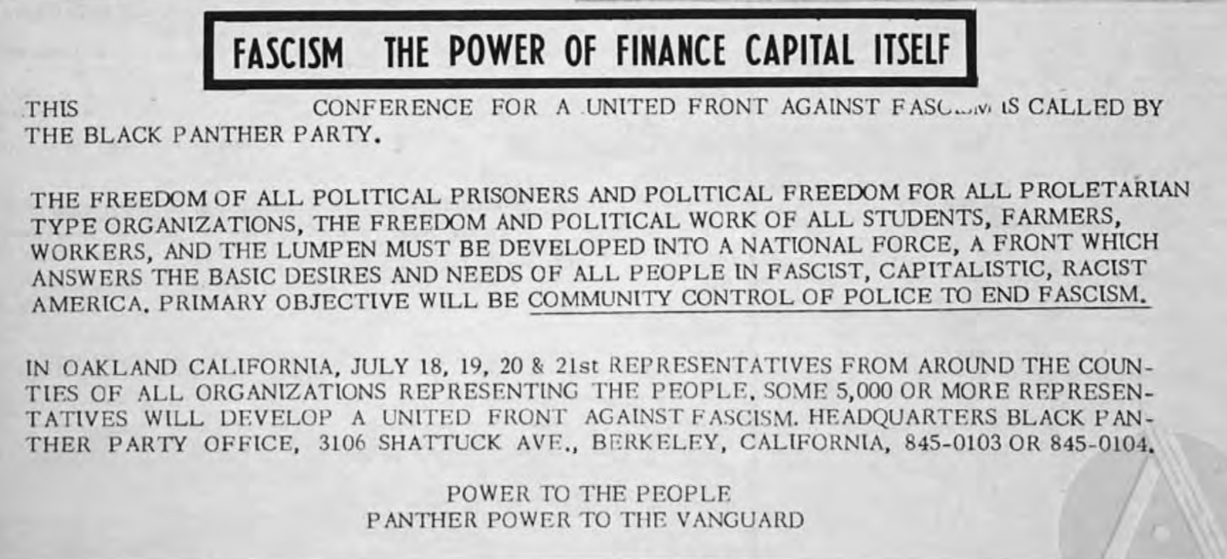
“The Black Panther” newspaper on July 19, 1969, marxists.org
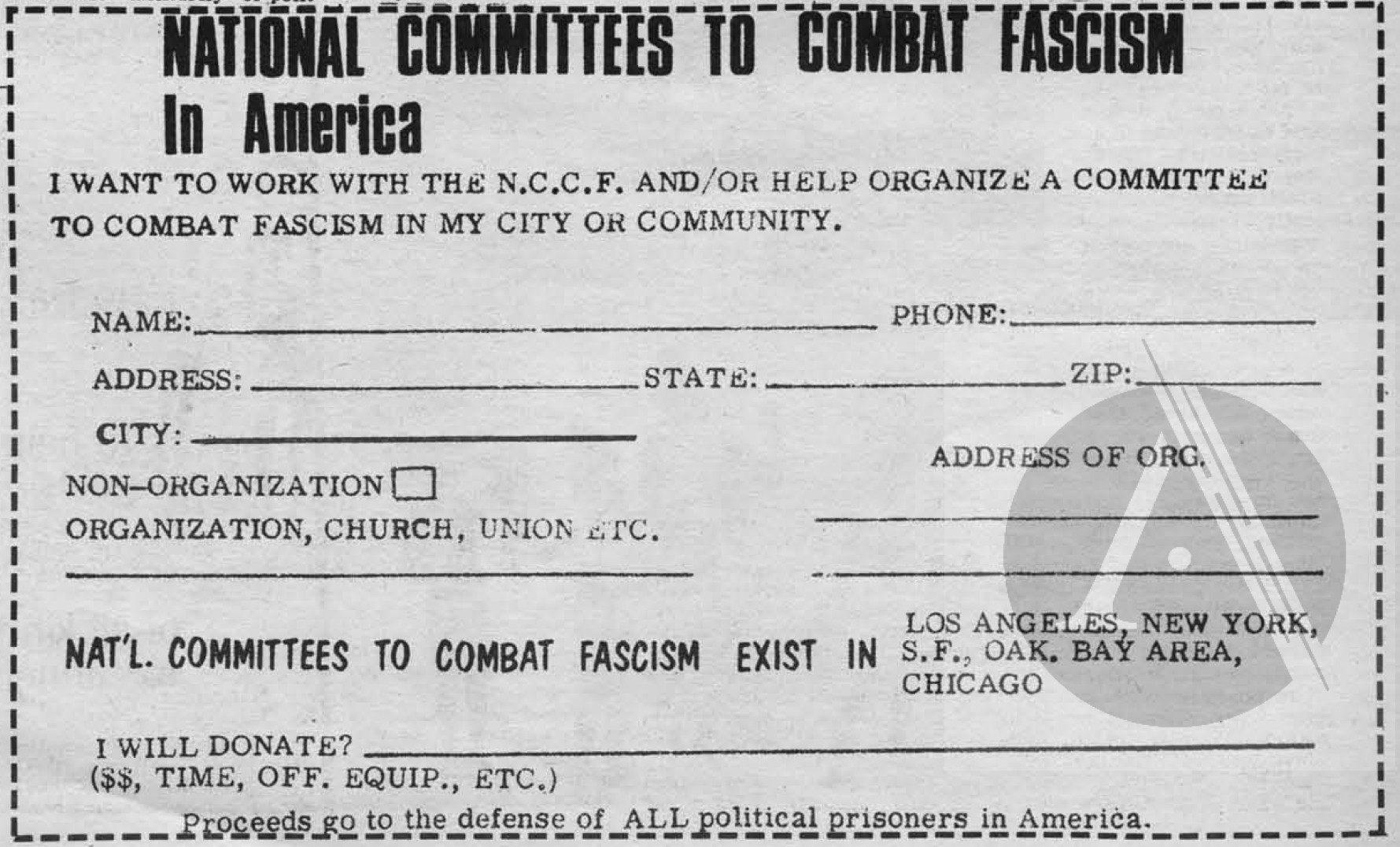
“The Black Panther” newspaper on July 26, 1969, marxists.org
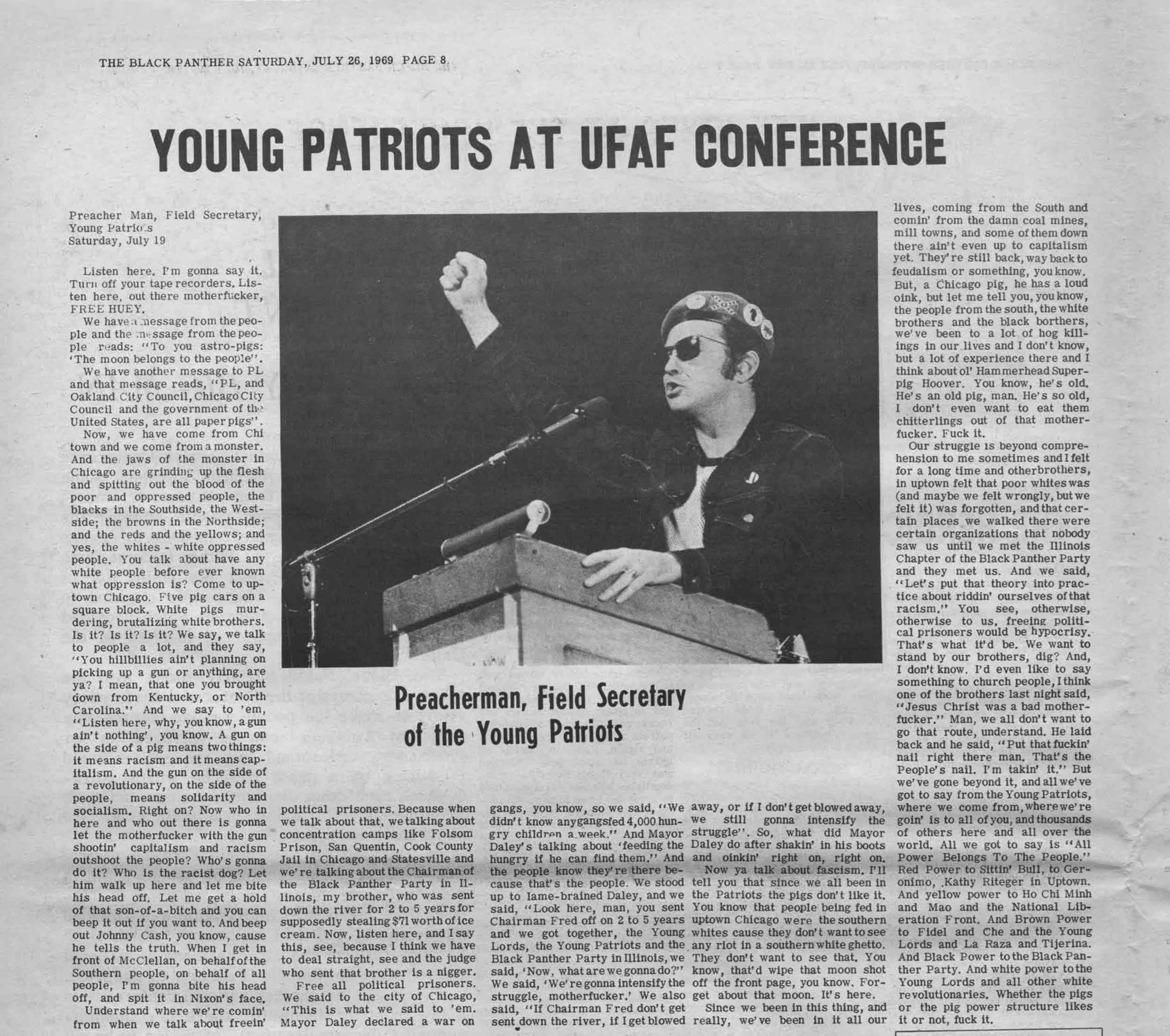
“The Black Panther” newspaper on July 26, 1969, marxists.org
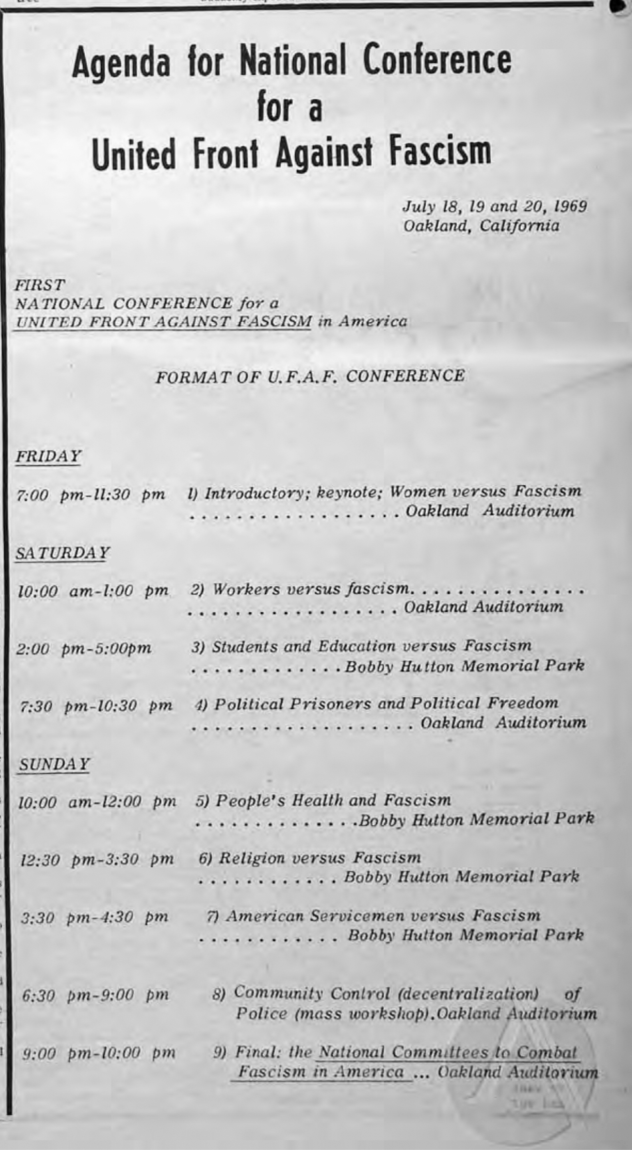
“The Black Panther” newspaper on July 19, 1969, marxists.org
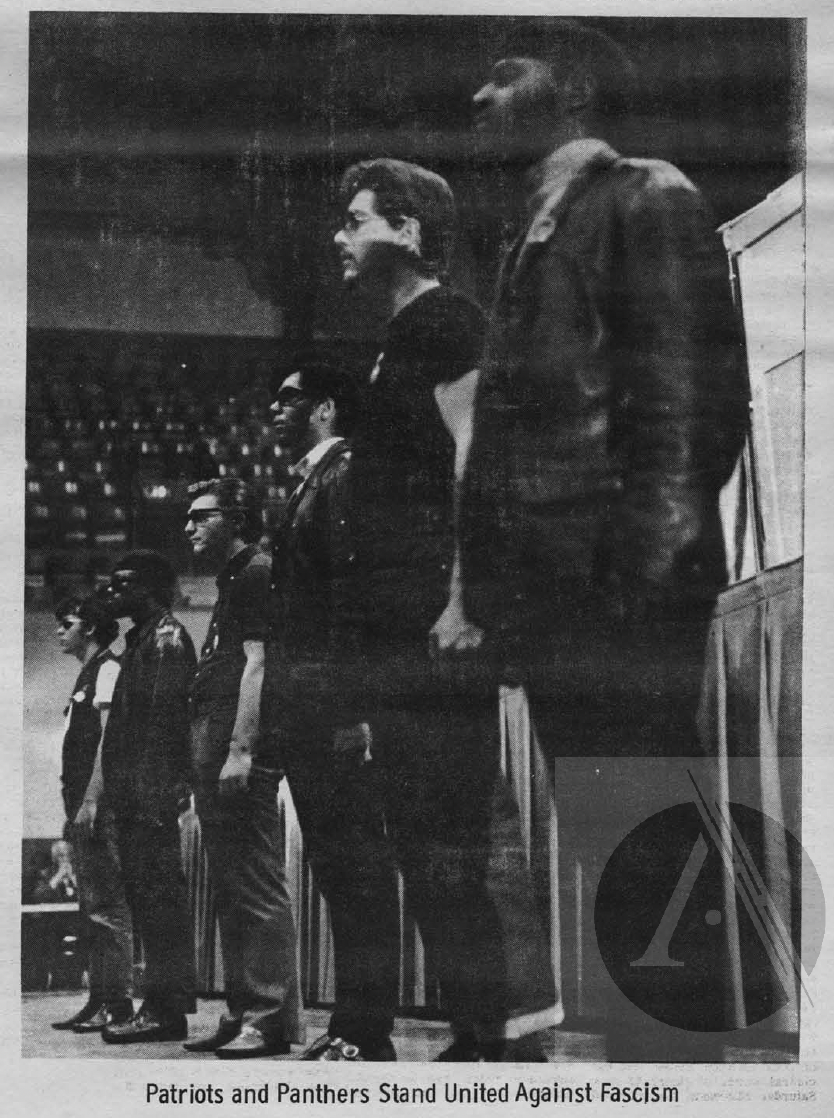
“The Black Panther” newspaper on July 26, 1969, marxists.org
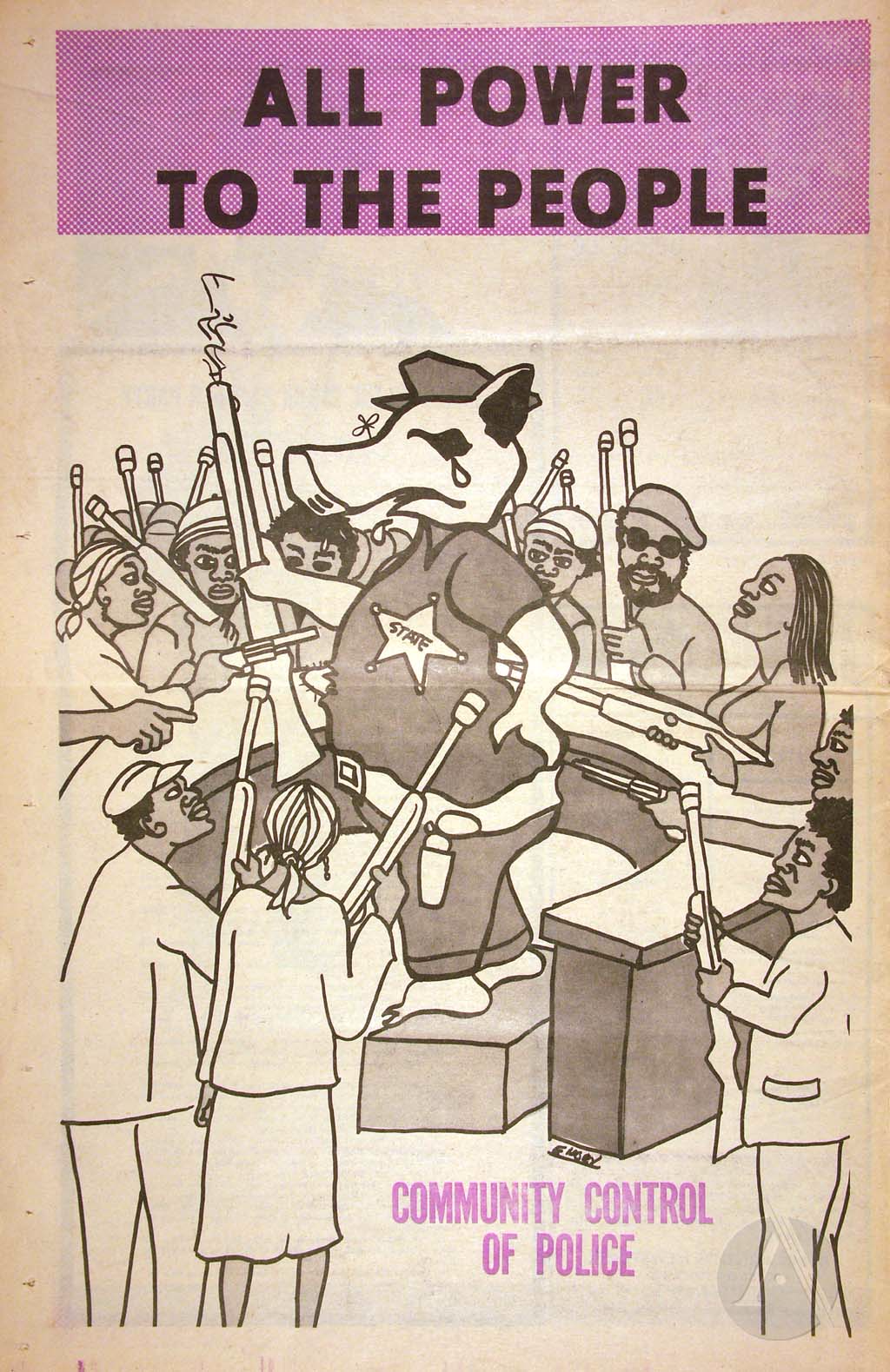
“The Black Panther” newspaper on October 11, 1969, marxists.org
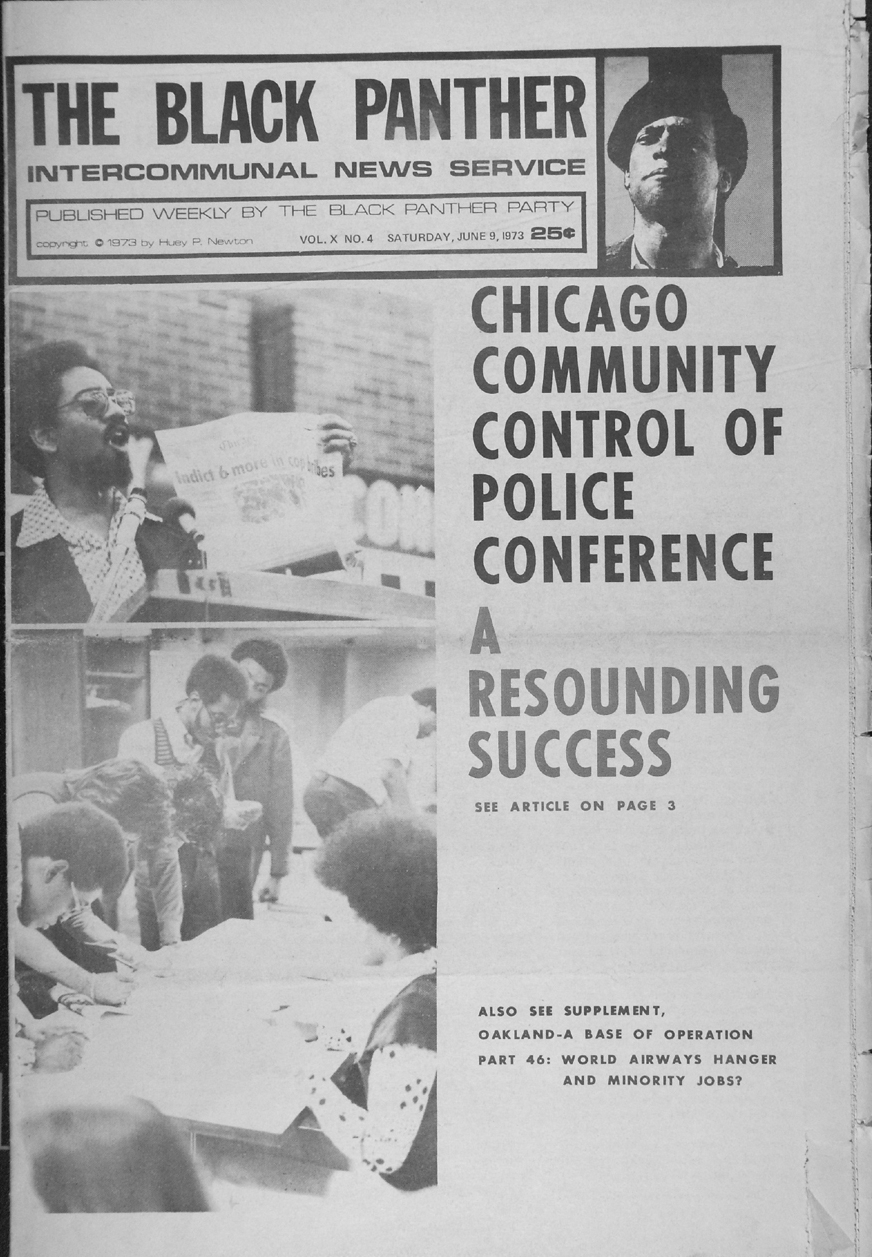
“The Black Panther” newspaper on June 9, 1973, marxists.org